


AI tools, automated summaries, and Google’s Search Generative Experience (SGE) are quickly reshaping how people go about finding information they need and want online. The legal industry hasn’t been exempt from this evolving trend, leaving many partners asking, is SEO dead for lawyers? With AI-generated answers appearing more regularly above traditional search results, it’s understandable that these questions are arising. Many worries revolve around fewer clicks, declining visibility online, and an overall reduced sense of control when it comes to crafting an effective digital presence. That’s why addressing the AI and SGE panic among partners is a must.
The good news is that there’s nothing to panic about. That’s because SEO isn’t dying, but instead, adapting simultaneously to the changing parameters AI and SGE are putting into place. Yes, the rise of AI has changed how users interact with search engines. What it hasn’t done is eliminate the need for trustworthy and authoritative legal content online. Many AI tools still rely heavily on high-quality legal websites to create factual responses. Firms investing in SEO strategies that are strong and reliable have the power to feed, influence, and even outrank AI-driven searches. The same can be said for fears around SGE. It’s easy to assume that eventually, AI summaries will replace organic search. However, when it comes to legal queries that come with very real personal consequences for users, it’s highly unlikely an AI-generated paragraph of information is going to cut it. It’s important to remember that people still want an authentic experience, accurate guidance, and real attorneys when it comes to trusting someone with their case.
The Evolution of Search: Why Law Firms Can’t Afford to Quit SEO in the AI Era
SEO for law firms is not only alive but truly thriving and perhaps more important than ever before. Searches are definitely evolving, but law firms that adapt their SEO to meet changing needs can stay visible, acquire new clients in great numbers, and establish their authority online. To do so, there are some core pillars of success to keep in mind in the AI era.
The Trust Factor — Why Organic Results Beat AI Summaries for Sensitive Legal Advice
It’s common for legal matters to not only be high-stakes scenarios for those involved but also emotionally charged and deeply personal. That’s why when someone searches for phrases like criminal defense lawyer near me, or what to do after a DUI, they are typically looking for trusted results from a law firm over a generic AI summary of information. These searchers are in an urgent situation and looking for professionals to guide them through the next steps. That’s where organic search results are going to outperform AI-generated answers online. While an AI-summary delivers up a quick overview, organic search results point users towards authoritative and credible resources that link to a real attorney’s website. When it comes to searching for sensitive legal advice, there’s a pressing need to see:
- Successful case results
- Comprehensive attorney credentials
- Testimonials from previous clients
- Local expertise
- Clear next steps to follow specific to a searcher’s situation
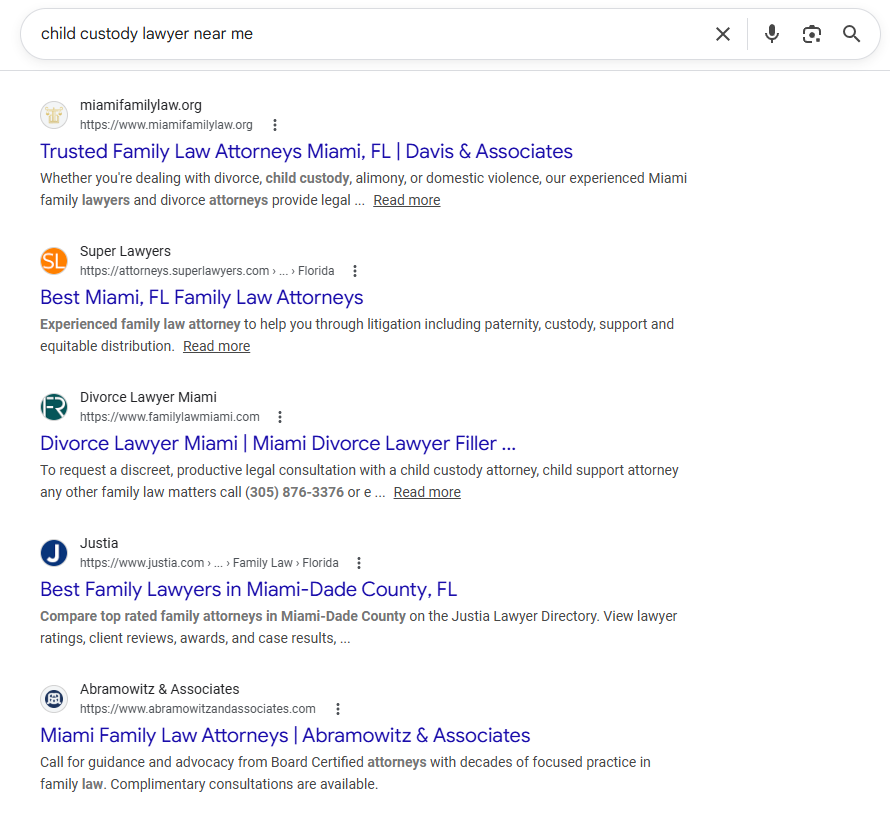
These are all considered vital trust signals that don’t typically appear in AI summaries but do appear on your firm’s website. Organic results also build in nuance specific to legal queries that AI tools simply don’t match. Where AI tools might give broad and generic explanations, organic results can point to personalized legal advice. This paves a tailored digital pathway to the confidence, context, and clarity that those looking for legal help online are searching for before making a decision. Looking at it this way, the question to ask isn’t “Is SEO dead?” But rather, “How can law firms strengthen SEO strategies to work in tandem with AI tools and search engines?” At Blue Media Marketing Law, we know that the answer lies in building:
- Localized content for your prospective clients
- Practice-area pages that demonstrate authority
- Comprehensive FAQ hubs focused on the legal fields you focus on
- Detailed attorney bios
- Case-specific resources
- Clear pathways to conversion online for those searching for help in real time
With these features in place, AI tools will be able to pull information from your firm’s website because it will rank among the strongest sources out there. This makes your firm visible and authoritative, not because AI did the work, but because your SEO allowed AI tools to highlight what you have to offer. This is a trust point for your clients that can’t be ignored and shouldn’t be overlooked in your strategy.
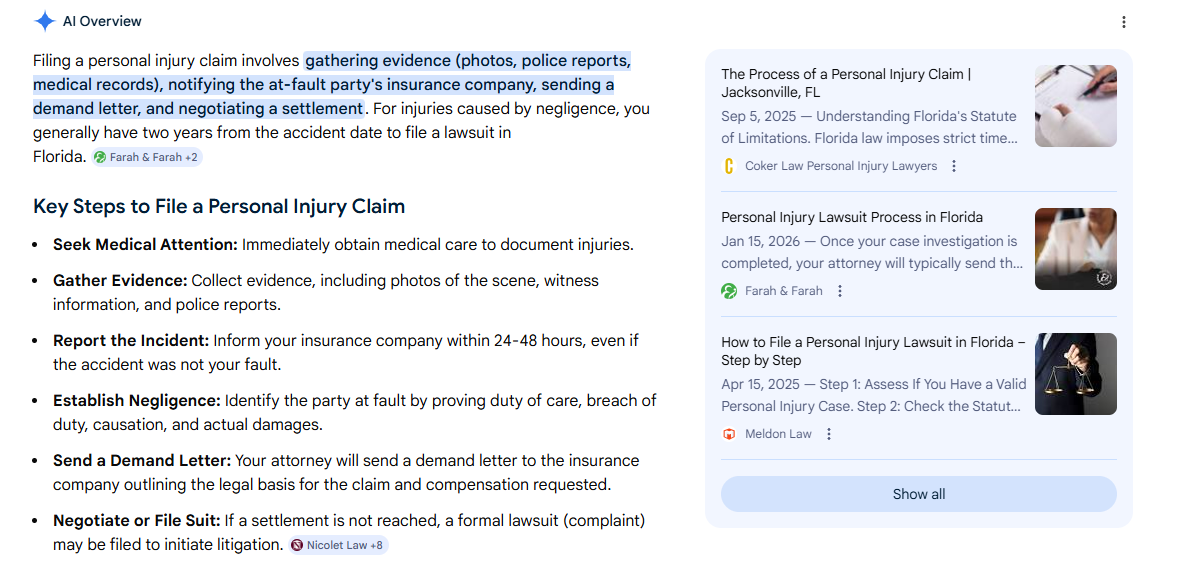
The Rising Cost of PPC — SEO as a Long-Term Hedge Against $300 Clicks
Yet another advantage of leaning into SEO in the AI era rather than moving away is the strategy’s ability to hedge against the rising cost of pay-per-click (PPC) advertising. PPC is notoriously expensive for law firms and costs have only continued to rise into 2026. In some current and competitive markets, clicks for search terms like “employment lawyer” or “criminal defense attorney” could run as high as $300 to $500 per click. For the vast majority of law firms, costs of this kind aren’t sustainable long term. This makes relying solely on PPC far too risky because the moment your firm stops paying, your online visibility disappears.
This is why SEO remains such a vital asset in the modern era of marketing. Once your SEO strategy is firmly in place, it’s a channel that’s going to continue to build traffic and see leads that convert without having to worry about those soaring per-click costs. SEO for law firms is a long-term strategy that successfully combats advertising costs while boosting your firm’s authority. It does this seamlessly by providing:
- Evergreen visibility to your information and resources online
- Improved long-term lead quality
- Compounding your Return On Investment
- Lower cost per acquisition
- Higher trust from users looking for legal assistance
While PPC can still support your marketing strategy, it’s not an approach that can singularly replace organic visibility for your firm. Relying too heavily on PPC can lead your firm to struggle with:
- Inconsistent leads
- Reduced long-term stability in your campaigns
- Marketing budget volatility
- Lower trust from users if your information suddenly disappears
Taking this into consideration, it’s easy to see why firms with strong SEO in place rest easy in more sustainable and predictable growth patterns.
Authority and E‑E‑A‑T — How Google Identifies Expert Legal Voices Through Signals
The backbone of modern search ranking begins with Google’s E-E-A-T framework. Short for Experience, Expertise, Authoritativeness, and Trustworthiness, E-E-A-T is far from optional for modern law firms looking to boost their rankings online. In fact, it’s often pointed to as the most prominent determining factor in deciding whether or not a law firm appears on page one or page five of standard search results for users. Legal SEO trends 2026 are pointing to searchers’ emphasis on credibility over keyword density. This makes E-E-A-T that much more important going forward. Understanding why this framework is so powerful begins with an inside look at how Google evaluates legal websites. To that end, an evaluation of this type often includes looking closely at:
- Verified case results
- Detailed attorney credentials
- Authoritative published articles
- Media features
- Trusted client reviews
- Bar admissions
- Speaking engagements
- Content depth, accuracy, and clarity
- Clear demonstrations of local authority in a practice area

In modern search practices, AI tools will also rely on these authoritative signals from your website. Those legal sites that don’t have strong E-E-A-T in place will quickly lose rankings. They’ll also see a significant dip in SGE results, voice-search responses, and prime visibility in AI summaries. To build or improve on E-E-A-T, your firm will want to craft:
- Legal scenario-specific FAQ hubs
- Easy-to-access case studies
- High-quality legal guides void of legal jargon
- Detailed attorney bios for readers to browse
- Comprehensive practice-area pages
- Localized content
- Consistent publishing schedules
- High-authority backlinks across your site
Google is raising the bar in the AI era, which means it’s important for your firm’s marketing strategy to keep pace. If you’re successful in meeting the new standards and implementing E-E-A-T, you’re sure to see significant and exciting growth.
The Zero‑Click Search Myth — Why Deep Legal Queries Still Drive Site Visits
For some, there’s a real fear around a growing belief that zero-click searches answered directly on Google, are quickly killing SEO. While it’s easy to see where these fears originate, it’s important to keep in mind that this myth doesn’t realistically apply to legal searches. Unlike other search arenas, legal queries are personal, complex, and usually extremely high-risk. This makes them questions that are far less likely to be satisfied by generic AI summaries or snippets. Modern search trends are still showing that users click through to verified legal websites because they need information around:
- Attorney qualifications
- Local laws and regulations
- Guidance built on case-specific information
- Legal fee structures
- Contact information for trusted attorneys
- A clear breakdown of next steps tailored to their legal situation
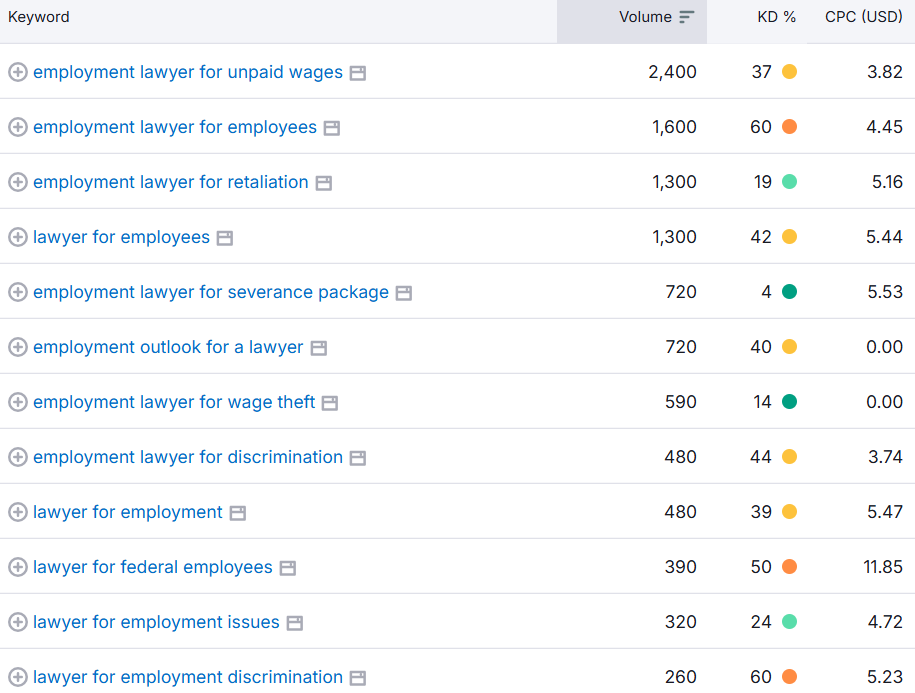
These are needs that zero-click searches can’t usually answer. While this type of search might dominate more simplistic searches, legal issues stand apart from the crowd. Many firms are finding that AI summaries and even SGE are increasing clicks when it comes to legal queries online. This is because generic answers are lacking, driving users to click through to law firms that feature strong authority signals. AI tools are built to reference, cite, and drive users to sites that showcase verified and high-quality content. With strong SEO in place, the zero-click myth could actually work in your firm’s best interest.
Why the Firms That Double Down Now Will Dominate the Next Decade
The best online marketing strategies out there aren’t those that are unwaveringly rigid, but those that take an adaptable approach to the ever changing digital landscape. The legal industry is entering a new search era that’s shaped by factors like SGE, AI, and overall rising standards of competition. However, this doesn’t point to SEO dying out, but the need for changes that make it more adaptable to the new parameters put in place. If your firm invests more heavily in SEO today, you’re more likely to be able to:
- Continue to dominate organic rankings
- Directly influence AI summaries and where they lead users
- Establish your firm’s long-term authority
- Attract higher-quality cases over time
- Future-proof your firm’s digital presence
- Reduce reliance on costly PPC