

The Importance of Tracking SEO Success for Law Firms
When it comes to SEO success, many law firms want to know one thing: “For every dollar we put into SEO, what do we get back? Search engine optimization can sometimes feel like a black box when reports are packed with different metrics, comparisons, technical jargon and charts that don’t clearly tie back to new clients or revenue.
The solution to this is not more data, but rather better data that is laser-focused on the specific law firm performance metrics that you care about. When you focus on KPIs that are related directly to client acquisition, you turn SEO from a vague expense into a measurable business channel.
What Are SEO KPIs? Understanding the Metrics Behind Law Firm Growth
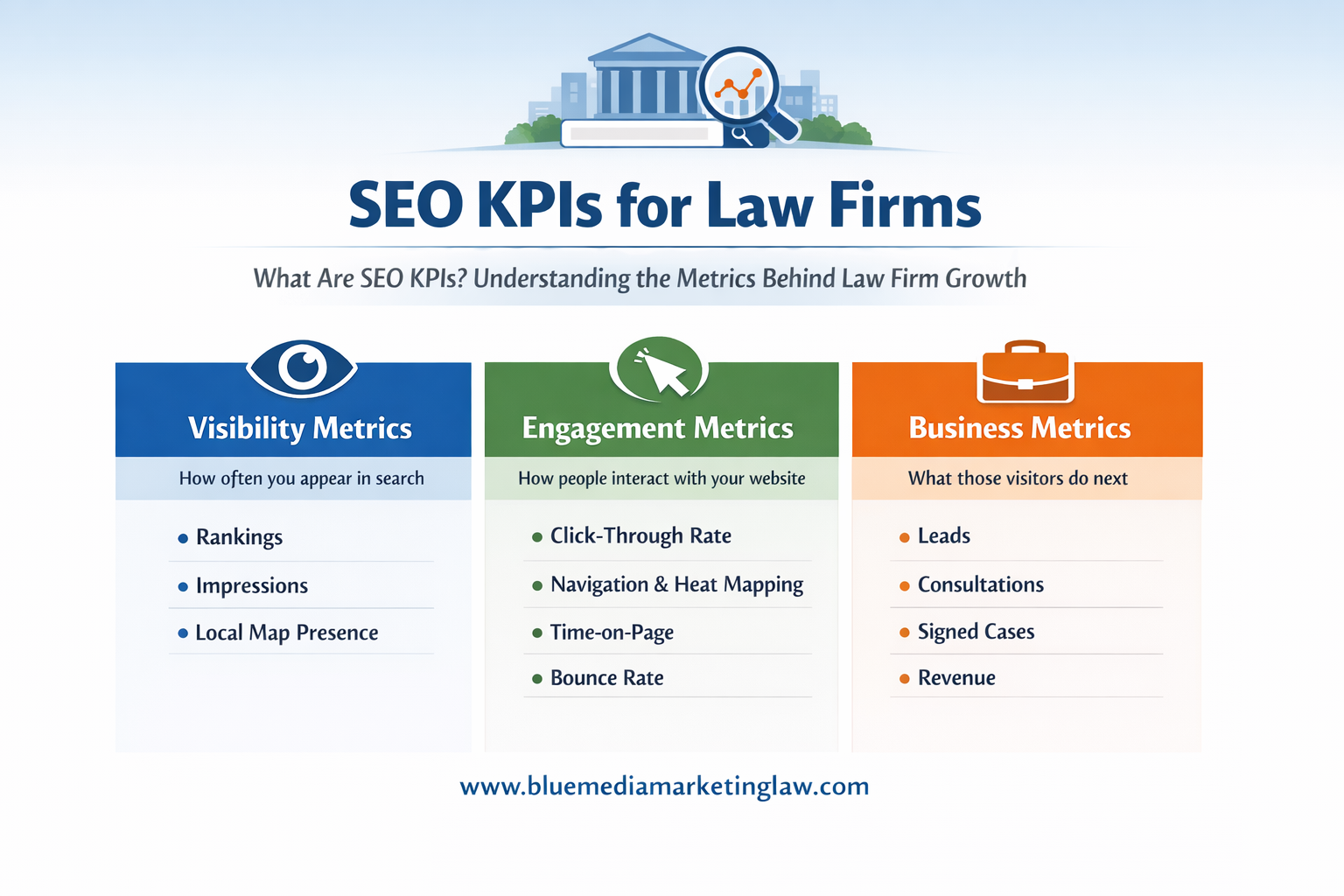
KPIs, or key performance indicators, are the scorecard that show whether your law firm SEO is driving growth. At a high level, they fall into three categories:
- Visibility Metrics: How often you appear in search (rankings, impressions, local map presence)
- Engagement Metrics: How people interact with your website (click-through rate, navigation and heat mapping, time-on-page, bounce rate)
- Business Metrics: What those visitors do next (leads, consultations, signed cases, revenue)
The challenge is, how do you tie all of these data points together in order to paint a full picture? This is where many SEOs fall short, focusing only on organic traffic numbers. The reality is, a good tracking framework follows the user through their journey starting at organic search, then click-thru to conversion, and ultimately measures revenue. Each step on that path has a corresponding KPI and, when those values are tracked together, you begin to form a concrete understanding of how SEO impacts your bottom line.
Beware: SEO Vanity Metrics
Not all metrics are equally useful. Vanity metrics are used to describe the ones that look impressive, but do not clearly connect to new cases and revenue. Say, for example, you see a highlight on a report that mentions “website visitors went up 10% month/month.” It sounds great at a glance, but there are many things that can drive traffic including spammy bots or bad press. A good SEO will dig in: Where did this traffic come from? Did we gain visibility for the right keywords? Did that increase in visitors correlate to more contacts? Did contacts turn into clients? Metrics that cannot be tied back to core business goals should not be at the center of your SEO reporting.
Top 10 SEO Agency Success Metrics for Law Firms (Core Section)
The heart of your SEO reporting should be the 10 metrics below. These are the specific KPIs to track if you want to evaluate your organic search performance honestly and understand whether your efforts are paying off.
1. Keyword Rankings for High-Intent Legal Searches
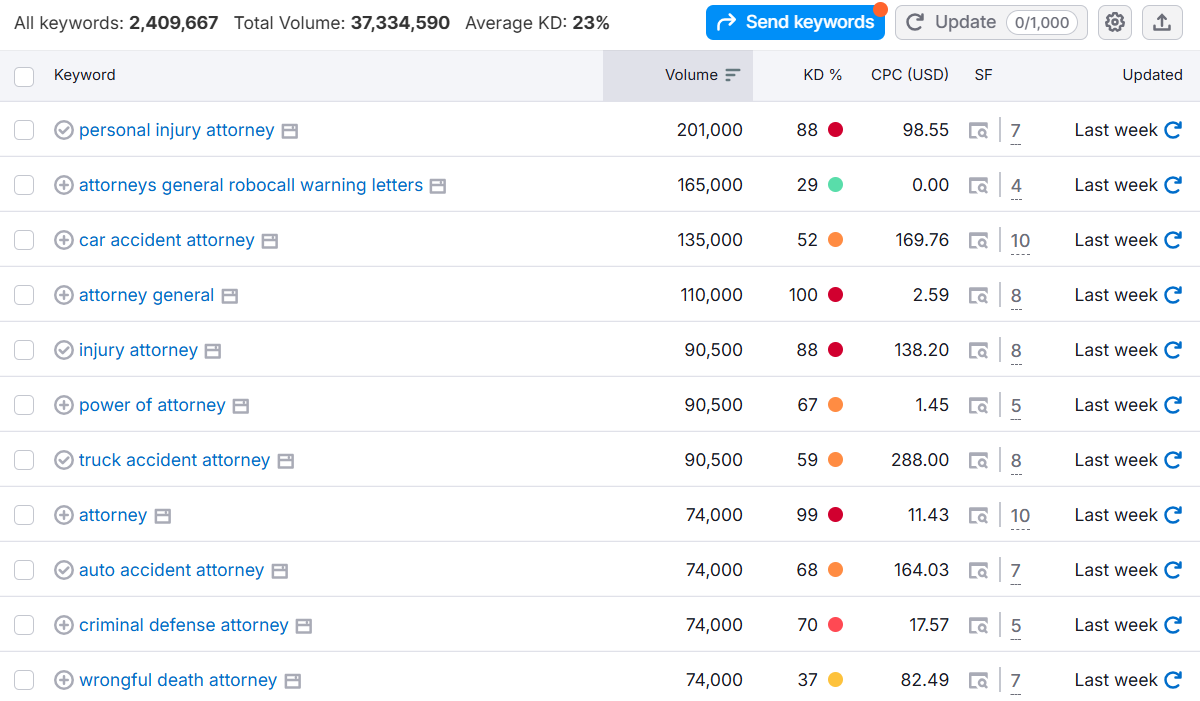
Many high-intent searches for legal help will begin with a specific need: “DUI lawyer near me,” or “divorce attorney in [City].” Your position for these types of searches is one of the most important performance metrics as these are high-intent keywords, suggesting that the user is ready to hire an attorney rather than a person who is just researching the law. Ranking for conversion-ready queries is far more valuable than showing up for broad questions that never lead to a call.
To ensure success, your firm should define a list of priority keywords for each practice area and location, then track how rankings for those terms change over time. Tools such as Google Search Console, Semrush, and Ahrefs can track key search terms over time, highlighting new ranking gains or losses and give you an idea of how that fluctuation may impact traffic. Defining and tracking key search terms that have a clear path to signed cases will ensure that your efforts are focused in the right areas in order to drive the rest of your SEO funnel.
2. Local SEO Presence: Maps & Local Pack Rankings
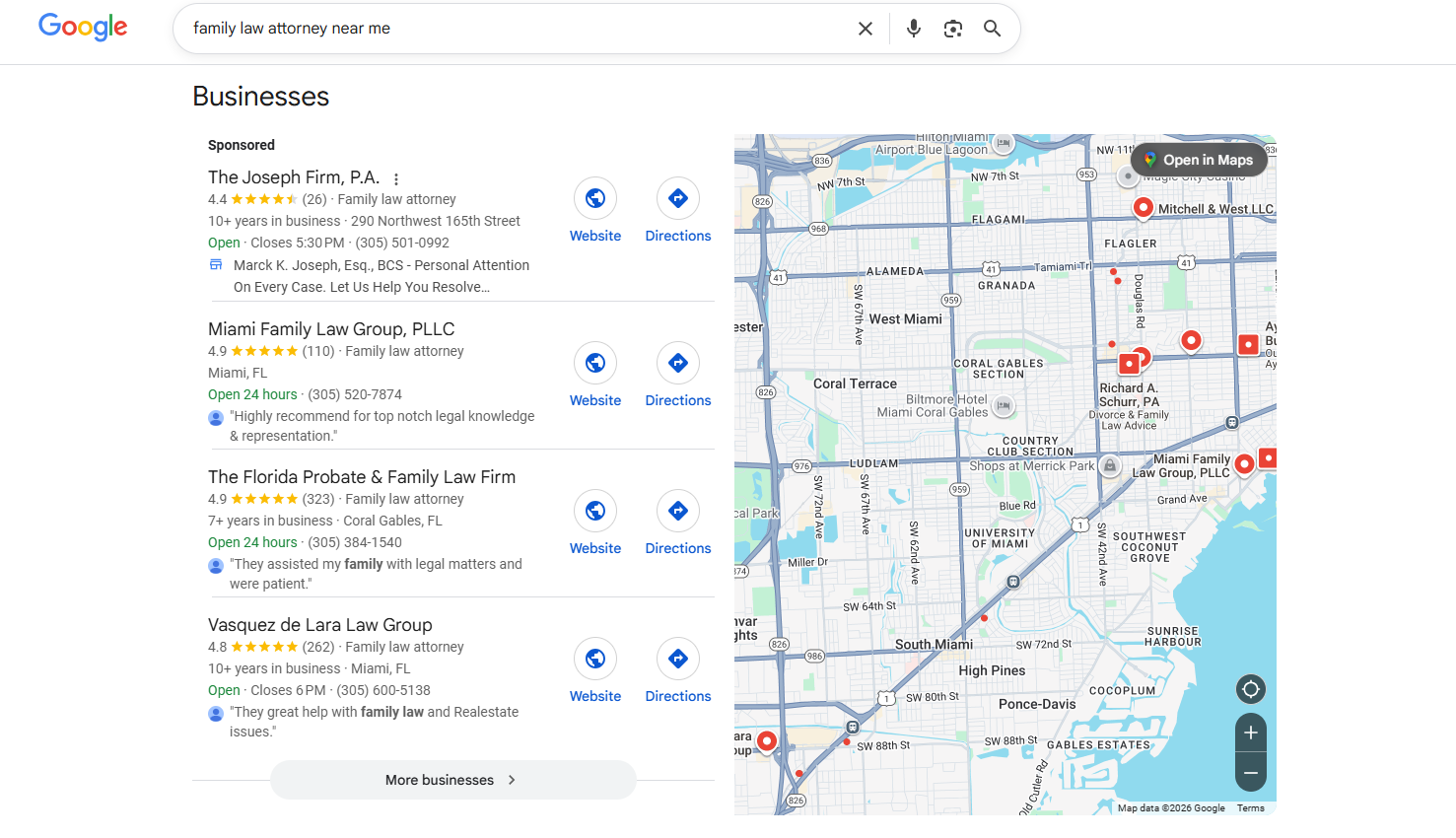
Your local presence is a critical SEO success metric. For many practices, the Google “map pack” (the listings shown near the map results) is where a large share of clicks and calls happen, because those listings feel nearby and trustworthy. When someone searches for “family law attorney near me,” the local pack appears front and center, above traditional results, making it one of the more powerful levers for visibility. If rivals dominate that limited real-estate, you are likely missing out on high-value contacts from people in your community.
Strong local presence depends on how optimized your Google Business profile is, the volume and quality of your reviews, and how consistent your contact details are across the web. Your SEO reporting should show how often you appear in the map pack for key searches and where competitors are outranking you. Tools such as Local Falcon and BrightLocal can help you track Google Maps rankings across your service area as well as monitor reviews and directory listings.
3. Organic Traffic Growth
Organic traffic measures how many visitors arrive at your website from non-paid search results. On its own, though, traffic is only part of the story. A blog post that attracts thousands of readers may build a strong authoritative brand voice, but if it never leads to a call, it is less valuable than a practice-area page that consistently converts visitors into clients.
A great approach to measuring organic traffic is tracking based on page type: practice pages, location pages, resources, and blog content. This will allow you visibility into how certain cohorts are attributing to business growth. Over time, with optimization, you hope that organic traffic to those high-value pages will increase over time. Conversely, if traffic growth is limited to low-intent or informational pages that never convert, it may be a sign your SEO strategy is chasing volume instead of getting in front of conversion-ready individuals.
GA4 is a Google tool that tracks traffic by channel and then attributes those sessions and users to dimensions such as source, medium, and landing page. Traffic Acquisition and Landing Page reports let you segment this organic traffic to analyze engagement and conversions by page, device, location, and other dimensions.
4. Lead Generation: Form Fills, Calls, and Live Chats
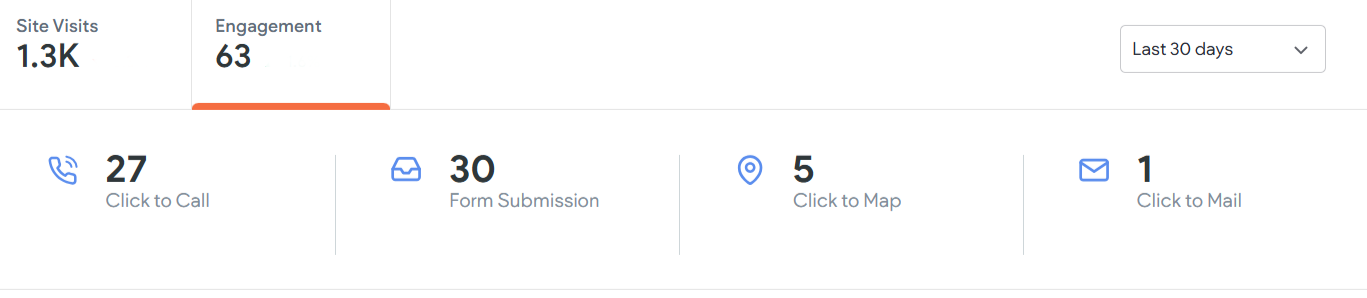
Leads are where SEO begins to impact your bottom line. These include calls from your website, contact forms, consultation requests, and live chat inquiries that started with an organic search. Tracking them accurately requires basic setup: unique phone numbers for website calls, form tracking, and chat tools that capture source data. A good SEO will configure these systems and report how many leads came from organic search, slicing the data to see where leads are coming from.
Lead quality matters just as much (if not more) than the volume of inquiries. 10 calls from unqualified or low-quality leads are worth less than three calls that become strong, profitable cases. As your SEO matures, it’s important to strategize for how to acquire good leads that fit your niche and ideal case type.
5. Conversion Rate From Organic Search
Conversion rate answers a simple question: of all people who visited from organic search, what percentage took a meaningful step, such as calling, filling out a form, or starting a chat? This metric shows how effectively your website turns anonymous visitors into real prospects. Conversion rate is the great equalizer; a site with modest traffic and a high conversion rate can outperform a high-traffic site that rarely generates inquiries.
Conversion data is also a diagnostic tool. If a page attracts many visitors but drives minimal leads, it could suggest issues with content, layout, performance, or calls-to-action. Effort spent chasing keyword rankings only to send traffic to low-converting pages will make your efforts less impactful. Identifying and improving the friction points is a critical consideration when it comes to a well-rounded SEO strategy.
6. New Cases Signed From Organic SEO
New cases is the metric that resonates most with law firms: how many new clients came from your organic search channel. It is the clearest way to connect your law firm’s SEO with real business outcomes. To track it, it’s important that you tag each new client by source, such as referral, paid ads, organic traffic, and so on. This will put a stop to the guesswork and allow you to see how SEO efforts are directly contributing to your bottom line. From there, you can calculate cost per acquisition, ensuring that you’re operating efficiently.
Breaking this metric down by practice area and location is especially valuable. You may discover, for example, that organic search drives most of your family law work but has little impact on business litigation, which can help influence how you strategically invest future efforts.
7. Revenue Generated From SEO Efforts
Signed cases are critical, but to understand how to measure the return-on-investment for SEO, you also need to know how much revenue those cases generate. Some cases are of higher value than others, so counting only volume can be misleading. Estimating revenue from organic search usually means multiplying that number of SEO-sourced cases by the average fee for each practice area. Contingency-based firms might instead look at total fees collected and identify what share came from organic search.
Once you have that revenue figure, comparing it against your SEO spend gives a straightforward picture of ROI. Having that clarity makes budget, staffing, and growth decisions easier and allows you to evaluate SEO alongside other marketing channels.
8. Backlink Quality and Authority Growth
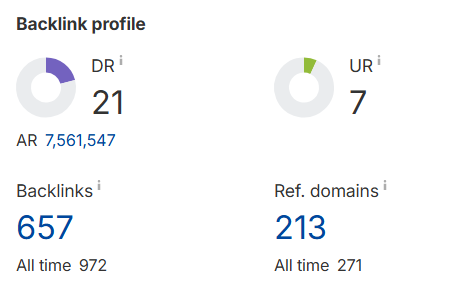
Backlinks are links from other sites to yours, and they are one of the main ways that search engines assess your authority and trustworthiness. For law firms, the most valuable links usually come from respected legal directories, bar associations, reputable news outlets, speaking engagement, and strong local engagements. When it comes to backlinks, quality and relevance are more important than quantity. A handful of links from websites with high domain authority (DA) can support rankings for competitive terms far better than hundreds of weak or low quality links.
When it comes to reporting, your SEO partner should not just focus on backlink growth, but rather on where links came from and why they matter to your business. Over time, tracking overall authority scores alongside rankings and traffic helps you see whether your SEO efforts are building a durable reputation.
9. Engagement Metrics: CTR, Time on Page, Bounce Rate
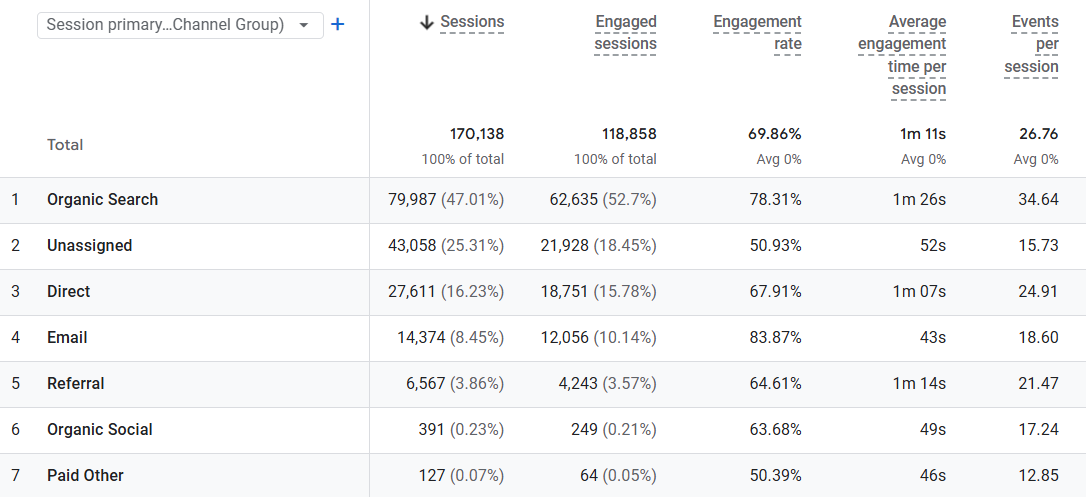
Engagement metrics describe what people do once they see or click on your website. The three most common are click-thru rate (CTR), time on page, and bounce rate. CTR shows how often searchers choose your result when it appears in search; low CTR suggests that your title or meta description is not compelling enough to earn clicks. Time on page and bounce rate can help indicate whether visitors find your content helpful or if they leave quickly to look elsewhere.
If specific pages or page types consistently show low engagement, there may be a friction point that requires addressing. Improving engagement through clearer copywriting, better structure, stronger calls-to-action, and solid site performance often leads to better rankings and more inquiries.
10. Technical SEO Health and Site Performance
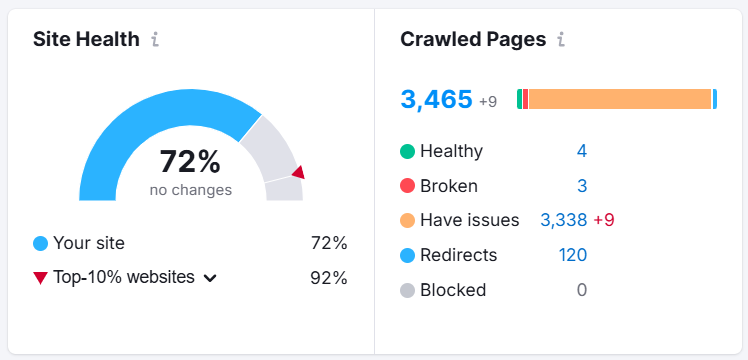
All SEO efforts depend on a solid technical foundation. Technical SEO health includes page speed, mobile friendliness, secure connections (HTTPS), clean site structure, and proper indexation of important pages. Bad technical health can have costly results including decline in rankings or, worst case, manual penalties that get your website removed from Google results entirely.
Your SEO partner should be able to quickly identify symptoms of technical problems such as good content that never ranks, sudden traffic drops, or glitchy page loads. Regular technical audits are essential in order to identify and address problems proactively and support better visibility, smoother UX, and ensuring qualified leads are able to access your services from any device.
Common KPI Mistakes Law Firms Should Avoid
Even with good intentions, it’s easy to track the wrong metrics or misinterpret the right ones. Common mistakes include focusing on keywords with little search demand, relying on vanity metrics, or panicking and over-correcting over short term dips without considering normal seasonal patterns. A strong reporting process compares year-over-year results and patterns, looks at rolling averages, and emphasizes long-term trends over week-to-week noise. When you and your SEO partner review metrics through that lens, you can make more informed decisions and avoid unnecessary or costly investments.
How to Hold Your SEO Agency Accountable in 2026
To hold your SEO agency accountable, start by agreeing on a shared scorecard built around the metrics in this article. Request monthly or quarterly reports around how these metrics are impacting your bottom line, with clear notes on what improved, what lagged, and what next actions are. During review calls. Request concrete examples and mini-case studies on what initiative they implemented and how it shifted rankings, traffic, leads, and signed cases. If your agency cannot explain that connection, it may be a sign to push for more clarity or consider other options.
Best Tools to Track Law Firm SEO Performance
You do not need a complicated tech stack to track law firm performance metrics effectively. Most firms can get an accurate view using a few core tools:
- Google Analytics 4 (GA4) to track traffic and conversion from organic search
- Google Search Console to understand which queries and pages bring people to the site
- A rank-tracking tool such as Semrush or Ahrefs to see keyword movements
- Tools to track local presence such as Local Falcon and BrightLocal to keep tabs on Google Maps rankings, reviews, and directory listings.
Your agency or SEO partner should handle setup and day-to-day management of these tools while giving your team simple dashboards and summaries that focus on the most valuable metrics.
Final Thoughts: Building a Data-Driven, Scalable SEO Strategy for Your Law Firm
When you track the right metrics, SEO stops being a mystery and starts behaving like any other business function that you can manage, evaluate, and improve. By centering your reporting around high‑intent rankings, local presence, organic leads, conversion rates, new cases, revenue, authority, engagement, and technical health, you give your firm a clear way to measure progress and hold your agency accountable.
If you’re in the market for an SEO agency that centers around clear, ROI-based reporting, let’s chat.