
Most searches for a lawyer start one of two ways: they search for an attorney “near me,” or they search for help with a specific legal issue that may not be tied to a single locale. That difference is at the heart of the local SEO vs. national SEO decision for law firms.
For some practices, showing up in Google’s local map results when someone searches for “family law attorney in Seattle” is the main driver of new cases. For others who are more niche or multi-location, being visible for broad searches such as “LLC Tax Law” matters more than dominating one metro area. Understanding when to prioritize local SEO, when to invest in national SEO, and when to blend both approaches helps your firm choose a strategy that best aligns with your business goals.
Why Understanding Local SEO vs. National SEO Matters for Attorneys
Attorneys often operate in terms of geography: local courts, state lines, and federal jurisdictions. Search engines behave similarly. Some searches have clear local intent, while others may be more location-neutral. If your law firm depends on clients from a defined region, local SEO tends to deliver the most measurable return. On the other hand, if you serve clients across state lines, operate in federal niches, or have offices in several states, national SEO becomes necessary for discovery outside of your home market.
Local searchers typically include some type of geographical signal such as a city, state, county, neighborhood, or a query that contains “near me.” Local SEO also captures the intent of a local searcher, optimizing for urgent demand. National searches tend to be more informational or niche, targeting specialized and often higher-value demand.
When Law Firms Benefit Most From Localized Visibility
Localized visibility matters most when your matters are tied to a specific court or region, such as:
- Criminal defense, DUI, and traffic matters Family law and divorce
- Local personal injury
- Residential real estate, landlord-tenant, and similar matters
In these situations, local SEO best practices such as optimized Google Business Profiles, city-specific practice pages, strong reviews, and thorough local citations, directly support the way your potential clients find you. For many firms, dominating their local market is often the highest-ROI strategy.
Attorney Local SEO vs. National SEO: Key Differences Explained
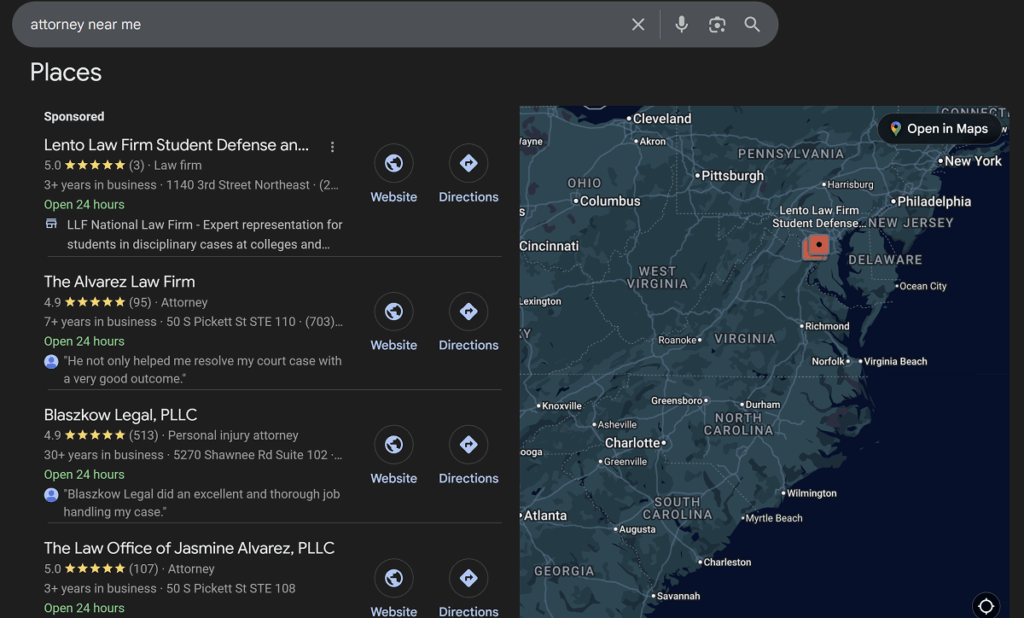
The key differences between local and national SEO comes down to how Google treats different types of queries, how hard it is to rank, and what users are trying to accomplish when they search. For local queries, Google typically shows a map with nearby firms followed by localized results, relying heavily on Google Business Profiles, reviews, categories, and location data. For broader national queries, Google cares more about content relevance, depth, expertise and overall site authority.
Local keywords typically have lower search volume, but higher intent, indicating that this person is more likely to initiate contact with your firm. National keywords tend to have a much higher volume but attract more research-stage visitors, so not only are they harder to rank for, but tend to be harder to convert.
How Search Intent Shapes Local vs. National SEO Strategy
Search intent is the “why” behind a search. High-intent local queries usually signal an urgent need. Take, for example, “DUI lawyer Los Angeles.” These users want answers fast and, while they might compare the top results, ultimately as long as you have clear services, reassuring language, and prominent contact options, it’s likely that with strong local SEO you will capture these prospective clients.
National queries are often earlier-stage and research driven. Users are evaluating options across the state or country, and deciding what kind of representation they need. National SEO succeeds when your content educates thoroughly, demonstrates experience, and makes it easy to engage when the user is ready.
For local SEO, your content strategy should focus on localized service pages, city-specific FAQs, and geo-focused blog topics such as local court processes, regional rules, or new local laws passed. For national SEO, content strategy should center on long-form guides, thought leadership, high value case studies, and resource hubs that speak to nationwide audiences and niche practice areas.
How Budget and Resource Allocation Shift
Local SEO generally requires less blog content and link-building than a full national campaign, but it still needs consistent attention to listings, reviews, and local information. With only local competition and local keywords that are generally easier to rank for, many practices see meaningful results within months of a focused effort. The budget tends to lean more modest, however, this can depend on several factors such as the saturation of other firms in your area or your growth goals.
National SEO often involves a more robust effort as you face tougher competition among large national firms. Ranking for high volume/high difficulty keywords requires a broad scope of in-depth content and a lot of high-value backlinks. In order to compete, a larger budget allocation should be expected. In addition, it may take 6-12 months of consistent optimization in order to see meaningful results.
Top Benefits of Local SEO for Law Firms
Local SEO is often the highest-return channel for firms whose clients are nearby, increasing the odds that high-intent prospects find and contact you. One of the main benefits of local SEO for law firms is visibility in Google Maps and the local pack, which sit at the top of overall search. These listings feel familiar and trustworthy, garnering a lot of engagement that directly translates to new visitors, calls, and consultations. When local SEO is done well, it ensures that you are visible to the people actively searching for an attorney in the areas that you serve, putting you front and center in their time of need.
As your firm grows, you can extend this model beyond your core location, creating dedicated pages and profiles in new markets.
Top Benefits of National SEO for Law Firms
National SEO shines when your firm wants to be known as a leader in a specific niche across the country. A main benefit of targeted national campaigns is ranking for highly targeted, non-location specific terms that will help you reach clients who prioritize expertise over geography. For multi-state or specialized firms, national SEO builds authority, attracts high-value referrals, and fuels a steady stream of complex cases.
Over time, this national reputation can also support your local efforts as search engines and clients alike see your brand as a trusted name in your area of law.
Common Mistakes When Choosing Between Local and National SEO
Many law firms struggle to decide which area of SEO to invest in. Common mistakes include:
- Half-baked strategies or hybrid approaches without the right allocation of budget and efforts.
- Pursuing national SEO for purely local practices that only serve one county or city.
- Targeting keywords with little or no search demand or that use legal terminology instead of the phrases that clients are searching
- Ignoring essential building blocks like location pages for local campaigns or deep informational content for national ones
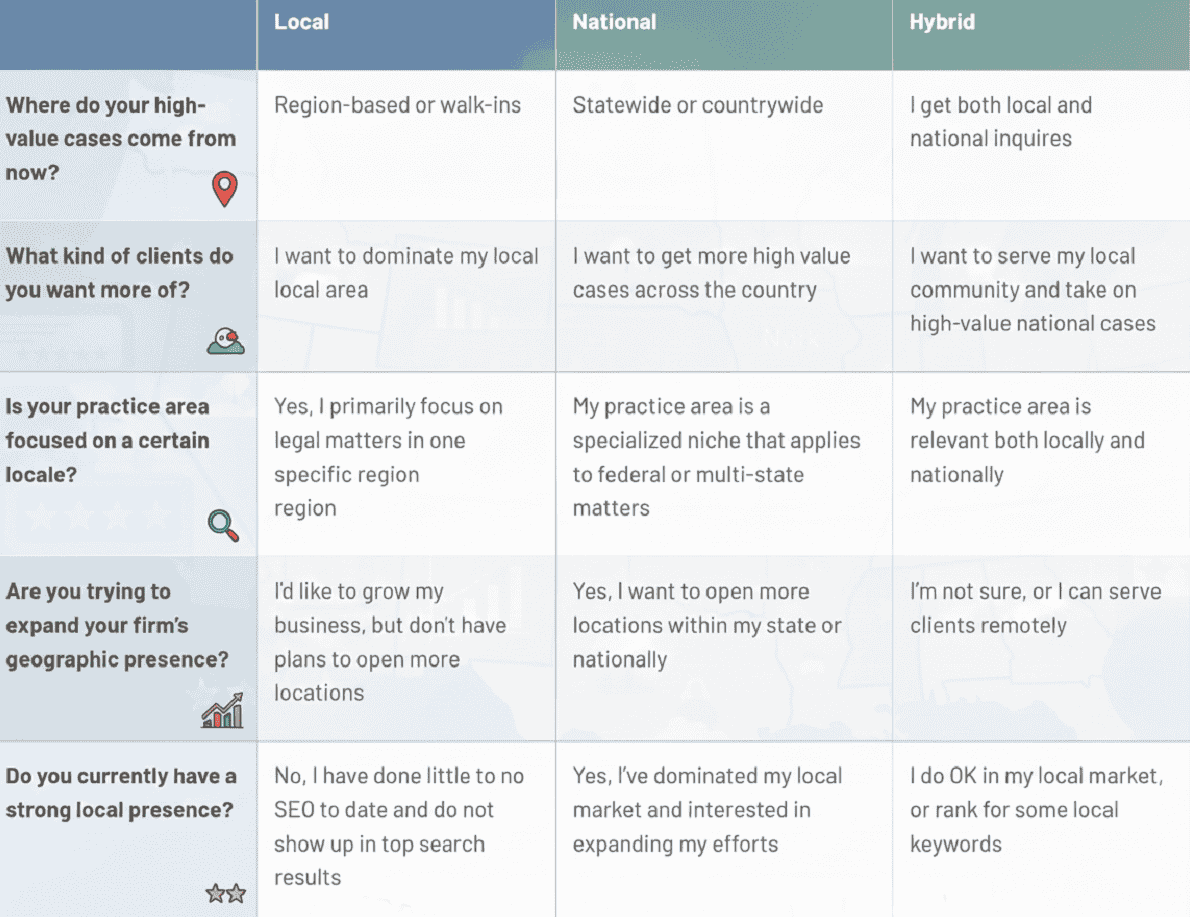
The best way to avoid these pitfalls is to start with your business model: where do your cases come from now, what kind of clients do you want more of, and where are you going to serve these clients? Local and national strategy should be chosen based on the kinds of matters that sustain and grow your firm.
How to Blend Local and National SEO Into a Hybrid Strategy
Blending local and national SEO into a hybrid strategy starts with structuring your site to rank at both levels: dedicated city or regions pages for local searches, and separate practice or topic pages aimed at nationwide, issue-based queries. A strong hybrid approach usually prioritizes local SEO first and then layers national strategies for niche and specialized practice areas.
Content should mirror this structure, with locally tailored FAQs and process pages for each market alongside long-form, thought-leadership pieces that speak to broader legal issues. Over time, measuring which channel (national or local) delivers better leads and cases can guide your strategy towards finding the best balance for growth both locally and nationally.
Metrics to Track When Comparing Local SEO vs. National SEO
To understand whether your local SEO and national SEO is working for your firm, it’s important to track metrics that tie directly to outcomes.
For local SEO, track local pack rankings and map visibility for key “near me” and city or region-based queries. You also should keep reports on rankings for keywords that are locale-specific.
For national SEO, it’s critical that you’re aware of where you sit in rankings for national keywords for your practice area and overall organic reach. Because national success relies on credibility and trustworthiness, you’ll want to have an idea of how authoritative your domain is.
With any good SEO campaign regardless of location, it’s critical to always look at how your efforts are resulting in ROI. Ensure that you understand your organic funnel metrics, such as clicks (CTR), consultations, and won cases, and have a way to track these.
Best Tools to Monitor SEO Progress
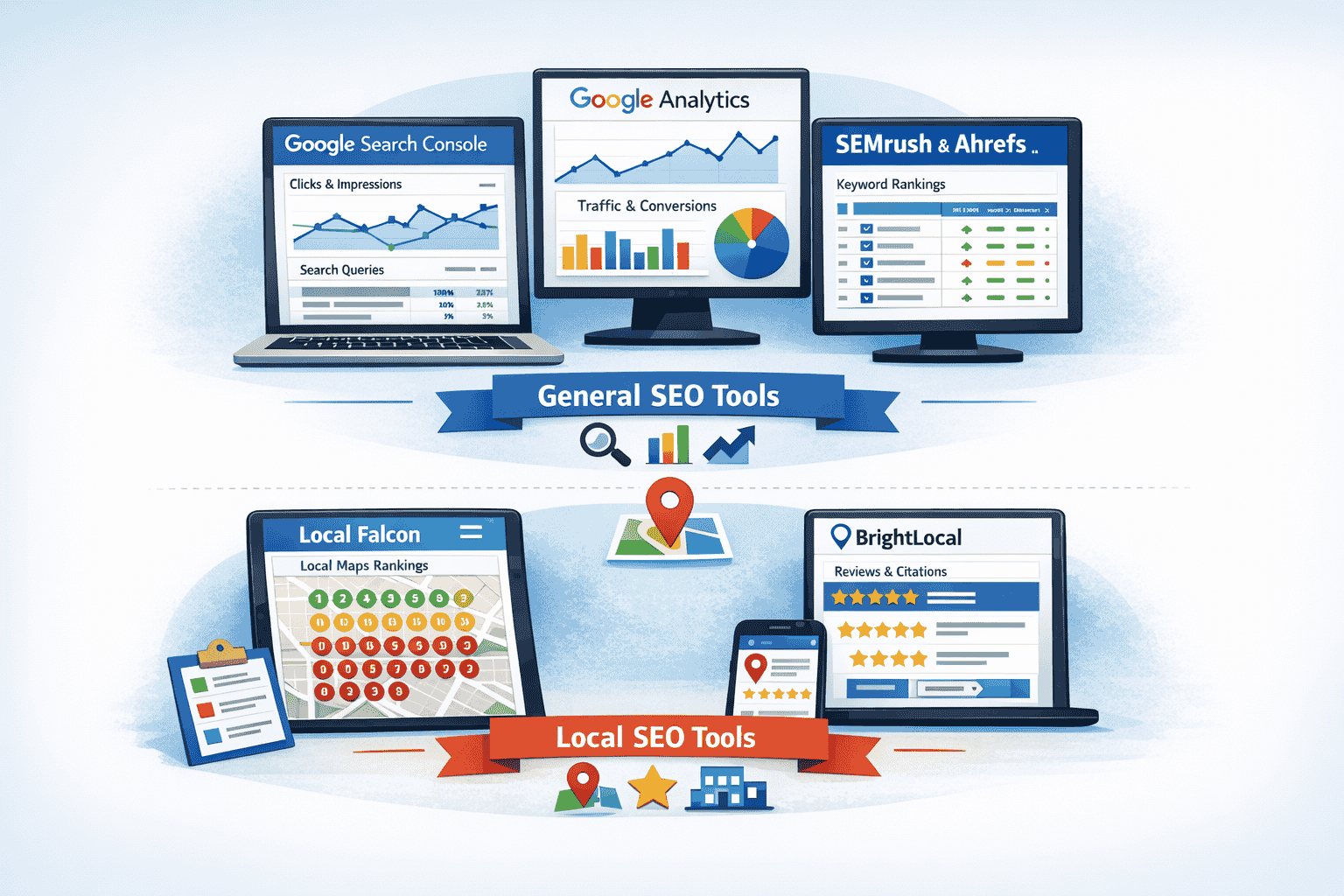
To track this data (and more), most SEOs use a combination of Google Search Console for search data, Google Analytics for traffic and conversion data from organic search, and a keyword ranking tool such as Semrush or Ahrefs. For local SEO, tools such as Local Falcon and BrightLocal keep tabs on Google Maps rankings, reviews, and directory listings.
Final Recommendation: Choosing the Best SEO Approach for Your Law Firm
For many firms, choosing the right approach is not a strict “either/or” decision. The most effective approach is not one-size-fits-all, but rather tailored to your law firm’s specific goals, practice area, budget, and where you currently stand in the competitive market.
Whether your next step is dominating your local map results, expanding into new markets, or growing a national presence around a niche practice area, it’s critical that you have a partner who operates as an extension of your core team. At Blue Media Marketing Law, we are committed to designing a tailored strategy around your business goals and executing it with transparency and a focus on your bottom line.