


Integrating Search and AI: Your 2026 Checklist for Market Authority
The Death of Passive SEO
When developing law firm seo 2026 campaigns, the truth is, the days of posting a few blog articles and tossing backlinks at your site are long gone. Google’s Helpful Content system and AI Overviews have ended the era of thin content and generic SEO tactics. If your firm’s website reads like a template, both Google and AI models will dismiss it as low-quality and unhelpful to potential clients.
The new reality is that Google, ChatGPT, Perplexity, and Gemini don’t just crawl your site, they evaluate your firm. They want to understand who your attorneys are, what you specialize in, and whether you’re credible. In 2026, if your firm isn’t recognized as a trusted source by both search and AI, you could be missing out on more than half of your visibility.
After a turbulent 2025 of new tech and shifting algorithms, staying ahead of legal seo trends demands a balance between next-gen innovation and proven SEO fundamentals. This guide is your blueprint for turning your website into an authority engine.
SEO vs. GEO: Which Is More Important?
Before we dive in, it’s important to drive one point home: You shouldn’t think of SEO and GEO as an either/or decision, rather, they are structurally linked. Strong traditional SEO is the foundation that makes GEO possible, because generative engines still pull their answers from well-optimized, crawlable, and authoritative websites.
Many of the same tactics power both:
- Deep topical content
- Clean technical architecture
- Advanced schema
- High-quality backlinks
- Consistent entity signals across the web
GEO simply builds on that base and pushes it further, with a focus on being cited in AI answers rather than just ranked in SERPs. In practice, that means firms need a unified strategy: invest in rock-solid SEO fundamentals, then layer on GEO-specific initiatives. The list below doesn’t abandon SEO foundations, but rather highlights what is necessary in addition to your current strategy in order to compete in an ever-evolving search and technical landscape.
The 10 Absolute “Must-Do’s” for 2026
1. Semantic Entity Siloing

Old approach: Organizing your content around individual keywords.
The new approach: In 2026, AI engines reward topic authority, not keyword density. Semantic entity siloing means structuring your website around comprehensive “topics” that AI can categorize as interconnected expertise. For example, a personal injury firm might benefit from a cluster, or “silo,” of pages covering causes, liability, insurance claims, state-specific statutes, and settlement timelines. When AI engines see this depth, they recognize your firm as an authority on the entire topic. This is how modern attorney seo strategies 2026 are built: topic by topic, not keyword by keyword.
2. Advanced JSON-LD Schema
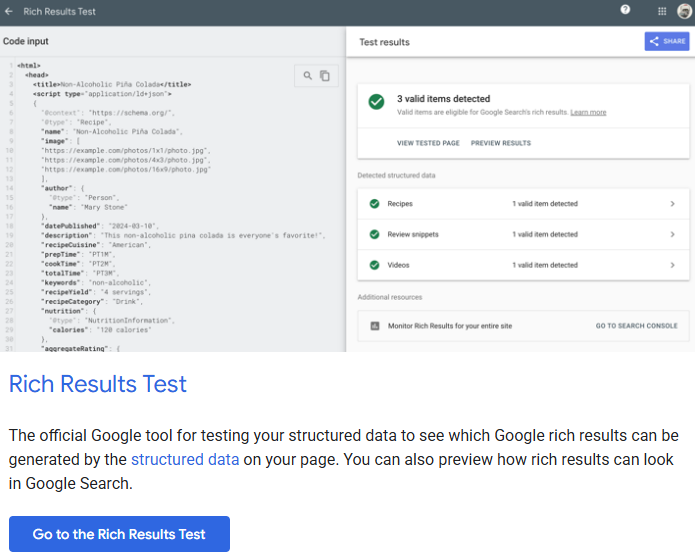
Old tactic: Basic schema markup is table stakes. If you’re only using LocalBusiness or LegalService schema, you’re leaving machine-readable intelligence on the table.
The advanced approach: Your firm needs JSON-LD structured data that goes beyond the basics. Tags such as Specialty, AlumniOf, Award, hasCredential, and KnowsAbout properties give more context to nextgen technologies such as AI crawlers and context engines. This markup tells Google, Gemini, and ChatGPT exactly what each lawyer brings, including their law school, bar admissions, practice areas, and professional recognitions, in a language that it best understands. Think of schema as your firm’s digital resume, written specifically for AI to read, interpret, and trust. Google explicitly recommends JSON-LD as the gold standard because it’s clean, maintainable, and separate from your HTML.
3. Interaction to Next Paint (INP) Mastery

Old data metric: Optimizing for First Input Delay (FID) for responsiveness.
New data metric: Google replaced First Input Delay (FID) with Interaction to Next Paint (INP) as its Core Web Vital for measuring responsiveness. Both metrics track how long it takes your website to visually respond after a user interacts with it: clicking a button, tapping a menu, submitting a contact form. The difference is that FID only measured the initial delay of the first interaction, whereas INP tracks the entire latency of all interactions, setting the bar higher for user experience. It is critical that your development team routinely audits every interactive element, defer non-essential JavaScript, and ensure every click feels instant.
4. GEO Citation Building
Old strategy: Focus solely on ranking in organic search positions, relying on basic SEO tactics.
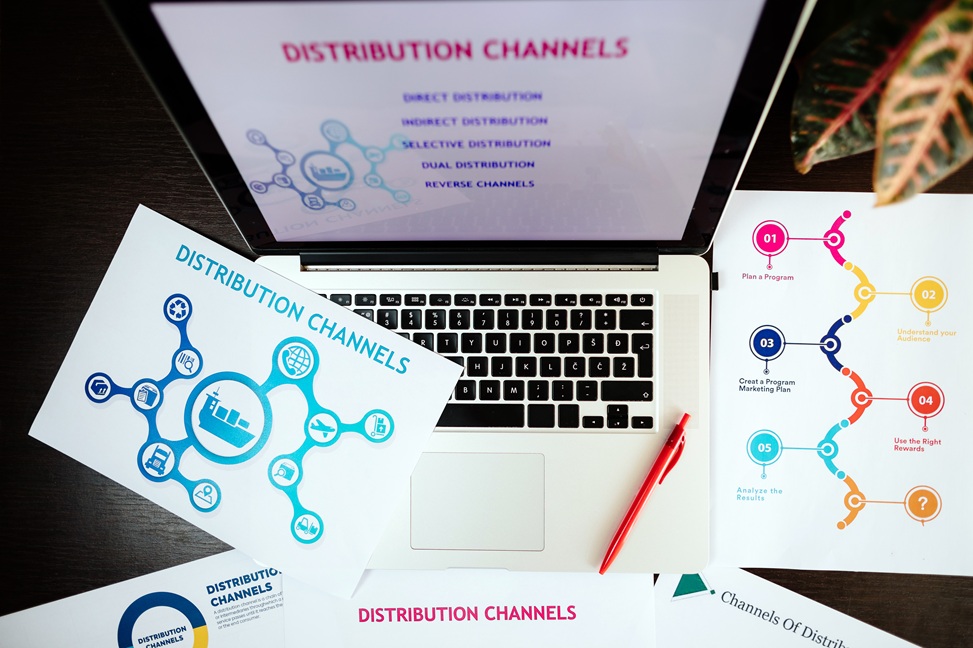
New Strategy: in GEO, or generative engine optimization, citation building is the process of getting your firm mentioned in the “sources” section of AI-generated answers from ChatGPT, Gemini, and Perplexity. The core focus is around making your content so authoritative that when an AI engine answers “best employment lawyer in Seattle” your firm is one of the sources it references. Top strategies include publishing original research, creating definitive guides on niche legal topics, and getting quoted in legal publications. Additionally, building entity signals across high-authority directories like Avvo, Justia, and SuperLawyers will compound over time, making your site more and more credible and, in turn, citable.
5. Video-to-Text Multi-Modality

Old approach: Focus primarily on keyword-optimized blogs with little or no investment in other types of media such as video.
New content strategy: Every blog post on your site should have a corresponding video. Google’s search results are increasingly multimodal, pulling from text, video, images, and audio to assemble answers. A blog about “What to Do After a Slip and Fall At Work” paired with a two-minute attorney explainer video gives you two shots at results: one for the text snippet and one for the Video Featured Snippet. Short-form video content such as attorney Q&As, case breakdowns, and FAQ responses drives measurable lifts in engagement. Video content also strengthens your entity signals because AI platforms cross-reference written and video content to validate expertise.
6. Review Sentiment Optimization

Old way of gathering reviews: Focus primarily on the quantity of 5-star reviews to showcase as a trust element, not caring much about quality.
How reviews have changed: Star ratings still matter, but in 2026, the words inside your reviews matter more. AI crawlers don’t just count stars, they are able to read the sentiment and specific language. A review that says “five stars, great lawyer” is less valuable than one that says “Attorney Smith guided us through a complex custody dispute with deep knowledge of Texas family law” which reinforces entity associations with specific practice areas and locations. There are many ethical ways to request that your satisfied clients leave a review and mention the type of case, the outcome, and qualities that mattered, without exposing personal information. Review sentiment is one of the strongest trust signals AI models use to recommend firms.
7. Hyper-Local Map Expansion

Old local SEO: Focus local directory citations for your physical office location, making you findable in your general area, but invisible to broader areas even if they’re in your jurisdiction.
New approach to local SEO: Most law firms serve areas far beyond their physical office. But if you only have one Google Business Profile optimized for your office address, you’re invisible in the Map Pack for surrounding cities. The focus should be a hyper-local strategy using geo-signals: localized content pages, area-specific testimonials, local backlinks from community organizations, and geo-tagged images. You don’t need a physical desk in every town but you do need Google to understand that your firm actively serves those communities.
8. E-E-A-T Content Verification
Old take on content quality: Google has always cared about accurate, safe, and helpful content, however, in recent years they have included stricter and more comprehensive evaluations of trust, especially for YMYL (Your Money or Your Life) topics.
E-E-A-T stands for Experience, Expertise, Authoritativeness, Trustworthiness. These are Google’s backbone of content evaluation. Every article and practice area page must be linked to a verified “Expert Author” profile. That means attorneys who author content need robust digital footprints: detailed bio pages with schema, active legal directory profiles, published articles in reputable publications, and consistent NAP information. When content is tied to a credentialed expert, it carries exponentially more weight in rankings and AI citations.
9. Zero-Click Featured Snippet Capture
Old method: Getting top organic rankings in order to drive users to your website.
New zero-click optimization: When a client needs an answer fast, the best thing to do is provide them with the necessary information with as little friction as possible. Zero-click featured snippets are excerpts (text, videos, tables) that appear at the top of the search results (in “position zero”), providing direct answers to queries without having to click over to your website. While it might seem counterintuitive, these snippets command massive visibility and position you as a trusted source. To capture them, structure content with direct-answer formatting along with FAQ schema. Added bonus: Incorporating direct answers into your attorney seo strategies 2026 also carries over into AI Overviews and generative search results.
10. Predictive Analytics Tracking
Old way of chasing traffic: “Newsjacking” is a common term in SEO that explains the practice of quickly creating content around breaking news or trending topics to ride the spike in search volume.
The new way of creating traffic: The most forward-thinking firms are anticipating trends. Predictive analytics uses AI and machine learning to forecast legal seo trends and which practice areas will surge in search volume based on local legislative changes, economic indicators, and seasonal trends. If your state is debating new employment legislation, search volume for related terms will spike months before the law takes effect. Firms that publish content ahead of the curve capture the advantage in both traditional and AI-generated results. Tools like Google Trends and SEMrush’s trend analytics help your team stay ahead of the demand cycle.
The Shift from “Traffic” to “Citation Value”
If your firm still measures success by website traffic alone, it’s time for a mindset shift. In 2026, successful search strategy isn’t just ranking on page one, it’s also when LLMs like Perplexity recommend your firm over a rival. It’s when ChatGPT cites your attorney’s article as the authoritative source on a legal question. It’s when Gemini names your firm in an AI Overview. This is “citation value,” and it’s the new currency of digital visibility.
It’s also important to note that high-quality backlinks haven’t lost their importance, but their role has evolved:
- They remain powerful “votes of confidence” for search and AI models determining trustworthiness.
- The old approach, focused on metrics like DA, anchor text, and top-level topic categories, is no longer enough.
- Today’s models analyze not only your site but also the source linking to you, using advanced reasoning to assess credibility, context, and relevance.
- Your backlink strategy should now emphasize quality, trustworthiness, and contextual alignment above all.
At Blue Media Marketing Law, we track your firm’s “Share of Voice” across both traditional search and generative AI. We monitor how often your firm appears in AI-generated answers, which queries trigger mentions, and how your citation frequency compares to competitors. This dual-lens approach gives our clients a complete picture of digital authority and a clear roadmap for growth.
Why Blue Media Marketing Law is the Partner for 2026
At Blue Media our mission is to future-proof your practice. We don’t chase the algorithm, we anticipate where it’s going and optimize accordingly. While other agencies scrambled to understand AI Overviews, our clients were already optimized for generative engine optimization months before the term went mainstream. Our team lives at the intersection of traditional SEO and AI-driven discovery, which means your firm isn’t just trying to keep up with the state of search, you’re leading the way.
We’re also proud to only represent one firm per market. When the 2026 algorithm shifts, we ensure our partner is the one that rises. To dominate law firm seo 2026, your competitors won’t have access to the same playbook. Blue Media’s exclusive model means every insight and strategic advantage goes directly to you.