

What’s Your Personal Injury Law Firm SEO Strategy Must Include
Choosing the right SEO partner can make-or-break your online visibility. Personal injury SEO should be focused on predictable, high-quality case volume. A great partner will consider all levers of SEO and provide you with a strategy that incorporates a mix of strategies tied back to your business goals.
At minimum, a proposal from an SEO agency should cover four pillars:
- Technical SEO that addresses crawlability, indexation, Core Web Vitals, mobile experience, and clean site architecture.
- E-E-A-T-optimized content built on long form, medically accurate, legally sound pages mapped to how injured people actually search for help.
- Authority and link strategy with a clear, compliant plan to earn trust signals from legal, medical, and reputable local entities.
- A plan for local and LLM visibility through Google Business Profile, Map Pack, and Generative Engine Optimization so your firm is cited in AI generated answers on platforms like ChatGPT and Gemini.
A strong proposal will also spell out how results are tracked across all channels, ensuring transparency into metrics that matter such as ROI and cost-per-acquisition. The result? A steady stream of high-value cases specific to your personal injury services. This guide explains how to compare SEO proposals for personal injury law firms so that you can separate true specialists from generic vendors.
The High-Stakes World of Personal Injury Search
In 2026, terms like “car accident lawyer” and “truck accident attorney” are among the most expensive and competitive keywords in digital marketing. High cost-per-click in paid search reflects high competition, driving up the effort required to rank organically. Because achieving organic visibility within the personal injury space is more difficult, when an SEO proposal looks thin or generic, it should raise an eyebrow. In this space, if corners are being cut on content quality, link acquisition, or technical optimizations, it’s unlikely that you will be able to outpace your competitors.
Many personal injury firms still receive “plumber style” SEO proposals: decks that look almost identical to any other proposal with logos swapped out and boilerplate promises. What is missing is any acknowledgment that personal injury marketing lives under legal ethics rules, complex medical legal terminology, and heightened scrutiny around claims such as “specialist” or “expert,” all of which raise compliance and quality expectations.
This guide explains how to compare SEO proposals for personal injury law firms so that you can separate true specialists from copy-and-paste vendors. Use it to evaluate whether an agency is realistically prepared to earn visibility in the most competitive and compliance-heavy corners of search, or is just selling a generic package.
Content Quality vs Quantity

One of the “watch outs” when reviewing proposals is generic promises such as “4 blogs per month” with no explanation of what those pieces are, who they are for, what value they provide, or how they lead to revenue. For personal injury firms, the homepage and practice area pages do a lot of the heavy-lifting, reinforced by strategic content hubs that target specific subtopics such as injuries, accidents types, and injury-related legal processes. It is very important that these cornerstone pages and supporting content are tightly planned and have a clear line-of-sight to how they impact key metrics.
When creating a content hub, a single 2,000-word traumatic brain injury resource that explains symptoms, diagnostic imaging, long term effects, and damages will usually outperform ten 500-word posts covering only the high-level information. When reviewing proposals, look for language around pillar pages, practice area hubs, or topical clusters. When considering content deliverables, prioritize word-count and depth of information rather than the number of pieces delivered.
Vetting E-E-A-T Standards
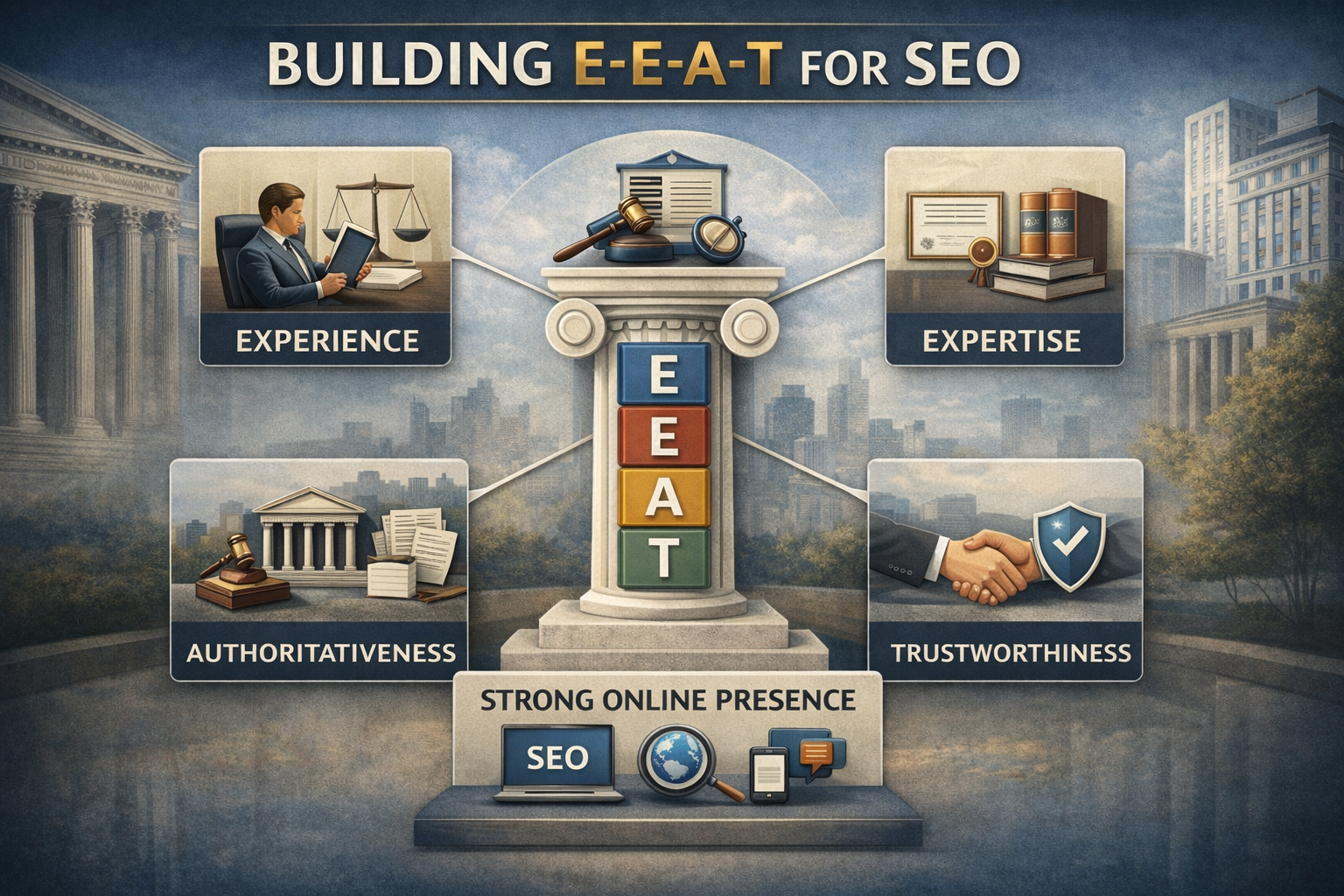
E-E-A-T stands for Experience, Expertise, Authoritativeness, and Trustworthiness in relation to online content. In 2026, generic AI-created content is increasingly likely to be filtered, ignored, or devalued by Google, especially in the legal and injury space. Proposals that quietly rely on bulk AI content generation without clear legal review is risky for both rankings and ethics.
Your SEO proposal should answer three questions clearly:
- Who drafts the content first: a legal writer, SEO strategist, or an AI system?
- Who reviews it: is there a legal assistant or attorney review before the content goes live?
- How is accuracy maintained for serious topics such as medical terminology, causation discussions, and local legal processes?
Ideally, injury and accident content is created or substantially reviewed by someone with legal training or deep personal injury writing experience, then edited for clarity and search alignment. An SEO agency for personal injury law firms should also explain how author bios, case results, testimonials, and citations to authoritative sources will be used to reinforce E-E-A-T on key pages.
Building Topical Silos

Personal injury is not a single topic in Google’s eyes; it is a network of overlapping but distinct sub niches such as wrongful death, 18-wheeler and commercial vehicle crashes, rideshare accidents, and premises liability. Strong proposals show how the agency will build topical authority for each priority case type through siloed content structures and internal linking.
An 18-wheeler accidents silo might include a main practice page, state specific statute explainers, FAQs on black box data, and content about common defense tactics. A rideshare crash silo might cover Uber and Lyft insurance tiers, independent contractor status, and how liability shifts between driver, platform, and other motorists. When comparing proposals, favor those that map content to the exact sub niches where the firm wants more cases, not just “personal injury” in general.
Strategy for Niche Link Placements
Link building remains core to ranking for competitive personal injury terms, but not all backlinks are created equal. Large volumes of irrelevant links from tech blogs, lifestyle sites, or random directories do little to help a law firm and can create risk if tactics violate search guidelines.
Personal injury firms benefit most from links that are topically and contextually relevant to law, medical topics, or the firm’s local market. A credible personal injury law firm SEO agency will specify that outreach and digital PR will target legal publications, medical resources, local organizations, and trusted directories rather than any random site willing to publish a link. When evaluating competing proposals, ask which types of sites will be prioritized, what outreach methods will be used, and how link quality will be measured over time.
Strategy for High-Authority Placements
Some of the highest value links for personal injury firms come from legal directories, bar associations, and respected news publishers. Proposals that mention optimizing and leveraging Avvo, Justia, FindLaw, and similar platforms show that the agency understands the authority ecosystem for attorneys. These listings not only provide backlinks but also drive direct referral traffic from prospects who rely on legal directories when researching representation.
Local and state bar association profiles, committee listings, and speaking engagement pages can create powerful authority signals when properly filled out and linked. Strong proposals include action items like updating bar profiles with consistent NAP details, adding links to key practice pages, and securing media coverage for notable verdicts and community initiatives.
Building Local Entity Signals

Beyond formal backlinks, Google relies on a wide set of local entity signals to determine which firms are truly relevant to a specific geographic area. Sponsorship pages for local sports teams, nonprofits, and events, as well as profiles in community organizations and chambers of commerce, help affirm that a firm is part of the local fabric.
Consistent NAP information across Google Business Profile, directories, and local websites is essential for Map Pack visibility, which is often where injured clients click first. Agencies that understand personal injury will address not just directory submissions, but also structured citations, unstructured mentions, and review generation from real clients. Look for a link building section that ties together legal authority, local involvement, and entity based optimization instead of treating backlinks as isolated technical tasks.
GEO (Generative Engine Optimizations)

In 2026, potential clients are just as likely to ask ChatGPT or Gemini “What should I do after a rideshare accident” as they are to type that query into a traditional search bar. Generative Engine Optimization focuses on positioning your firm as a cited source in those conversational answers, not just in blue links.
GEO means building structured, clear, well sourced content that AI systems can easily parse and reference. That includes FAQ sections that mirror natural language questions, concise definitions of legal terms, and explanations that can be quoted in an answer box or AI summary. It also requires clean site architecture and schema so that LLMs can confidently attribute statements to the correct attorney, office location, or practice area page. When comparing proposals, prioritize those that describe how content and technical configuration will help the firm become the authoritative answer source for specific injury scenarios and local queries.
Schema Markup Mastery
Schema markup is the structured data that helps search engines interpret what is on a page and how it should be displayed in results. For personal injury firms, LegalService and LocalBusiness schema signal that a page represents a law firm serving a particular area and practice type, which is essential for rich results and local visibility. FAQ schema can help common questions appear directly in results or in AI generated responses.
A comprehensive proposal should include a plan for which templates will carry LegalService schema, how LocalBusiness schema will be customized for single versus multi-office firms, and where FAQ schema will be deployed. It should also address how schema will be validated and monitored after site updates so errors do not undermine visibility.
Mobile Speed & Conversion (CRO)
Most accident victims search for help on a mobile device, often at the scene or in the hours immediately after an incident. If a site takes longer than a couple of seconds to load, frustrated users will hit back and click the next firm. Google’s Core Web Vitals updates have tightened expectations for speed and interactivity, so performance is both a ranking and user experience issue.
A credible proposal will commit to fast load times on key landing pages and describe how that will be achieved through image optimization, code cleanup, caching, and modern hosting. It should also address conversion rate optimization, explaining how click-to-call buttons, persistent mobile headers, chat options, and simple, mobile friendly forms will be deployed so that visitors can contact the firm with minimal friction. The best agencies bake performance and CRO into ongoing workflows so new pages and content updates do not erode gains over time.
Why Blue Media Marketing Law Wins the Comparison
One of the Blue Media’s differentiators is exclusivity. We maintain exclusive niche protection by partnering with only one personal injury firm per geographic market, rather than serving multiple competitors in the same city. That approach prevents conflicts of interest and keeps strategy, content, and link outreach focused entirely on defeating a single set of rivals. For the firms we partner with, our reporting centers on the metrics that matter most to partners: signed cases, qualified consultations, and cost per acquisition across organic and local channels. We highlight how SEO, GEO, and local visibility translate into new retainers, higher value cases, and a stronger pipeline for the firm.