
Dominating Your Local Market
Law firm managing partners and marketing directors are currently facing a terrifying reality when they look at their Google Analytics dashboards. Website traffic is dropping. Organic sessions are flatlining. Panic sets in as firms assume their search engine rankings have tanked.
The reality is much more complex and presents a massive opportunity for the firms willing to adapt. The traffic drop is not always a ranking issue. It is a fundamental shift in user behavior driven by the zero-click search phenomenon. Recent 2026 data from SparkToro reveals a startling truth: a massive 68% of all Google searches now end without a single click to a third-party website. Mobile users abandon their searches without clicking external links over 77% of the time.
Google AI Overviews and heavily enriched Search Engine Results Pages are satisfying user intent instantly. Users ask a question, Google answers it right on the page, and the searcher leaves. The search engine results page itself is the new landing page.
For law firms focused on acquiring high-value cases, this zero-click crisis is the greatest market shift in recent history. If users are no longer clicking through to your beautifully designed website, your primary conversion tool must evolve. Your Google Business Profile is no longer just a digital address marker. It is the apex predator of local lead generation. The firms that pivot to optimize for direct, on-SERP conversions will capture the lion’s share of local market revenue, driving down their cost per acquisition while competitors bleed leads to the ether.
Decoding the Zero-Click Client Journey in Legal Marketing
Understanding how potential clients interact with the modern search engine results page is the first step to reclaiming your intake pipeline. When a user types a high-intent, localized query like “car accident lawyer in Phoenix” or “divorce attorney near me,” they are not looking for a 2,000-word blog post on the history of tort law. They are experiencing a high-stress legal crisis and want immediate, trustworthy representation.
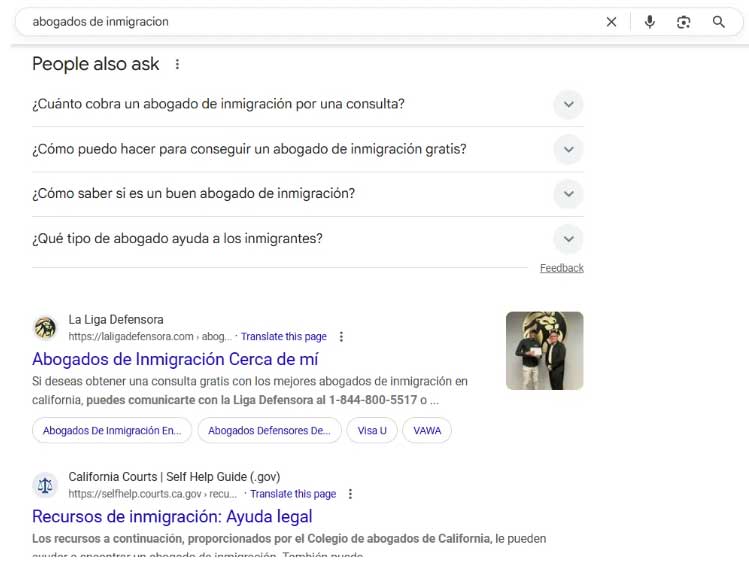
Google recognizes this urgency. Instead of presenting a simple list of blue links, the algorithm triggers a localized, hyper-visual response. The user is instantly met with the Local 3-Pack, Google Screened advertisements, and AI Overviews.
The anatomy of this zero-click journey is built on instant gratification. Within seconds, a prospect can:
View a firm’s aggregated star rating and read recent client reviews.
Check physical proximity to their home or office via Google Maps integration.
Confirm business hours and see if the firm is currently open.
Tap a “Call” button directly from their smartphone screen to initiate intake.
All of this happens without a single visit to your law firm’s actual website.
Many law firms operate under the dangerous misconception that endlessly publishing low-quality, top-of-funnel blog posts will inevitably drive signed retainers. The data proves otherwise. Informational traffic is shrinking rapidly as AI engines answer broad legal queries natively. To maximize law firm ROI and outsmart market saturation, attorneys must aggressively target hyper-local, high-intent visibility.
When a user skips the website entirely, the digital asset that captures that zero-click lead is the Google Business Profile. Dominating the Map Pack means positioning your firm at the exact point of conversion, effectively skipping the traditional friction of website navigation and funneling the user directly to your intake team.
Architecting a GBP Built for Instant Lead Acquisition
Precision Categorization and Trust Signals
The foundation of zero-click lead acquisition rests on how precisely your Google Business Profile is configured. The algorithm relies heavily on your “Primary Category” to determine relevance for high-intent legal searches. This single data point carries a disproportionate amount of ranking weight in local search.
Law firms make a catastrophic error when they select generic categories. Categorizing your multi-million dollar practice simply as “Lawyer” or “Law Firm” guarantees you will be buried under competitors who understand local search mechanics. You must prioritize highly specific, high-ROI categories that match your exact target demographic. A firm looking to secure lucrative catastrophic injury cases must select “Personal Injury Attorney” as their primary category. A firm targeting high-asset marital dissolution must choose “Family Law Attorney.”
Beyond the primary category, maximizing your digital footprint requires treating your profile as a comprehensive micro-site.
Complete the profile to 100% capacity to trigger Google’s trust algorithms.
Populate the “Services” and “Products” tabs to target niche practice areas like “Commercial Truck Accident Litigation” or “Child Custody Modifications.”
Embed critical legal credentialing directly into the business description.
Including your state bar number, board certifications, and years in practice within the first few lines of your description directly satisfies Google’s stringent E-E-A-T guidelines. Proving your Experience, Expertise, Authoritativeness, and Trustworthiness natively on the platform signals to both the algorithm and the potential client that your firm is the premier choice.
Weaponizing Social Proof: Review Strategies That Force the Call
In a zero-click environment, online reviews transcend being a simple vanity metric. They act as the primary conversion catalyst. When a user bypasses your website, they bypass your carefully crafted attorney bios, your slick video testimonials, and your listed case results. The only reputation they see is what exists on the Google Business Profile.
Consider the split-second psychology of a user evaluating the Local Map Pack. They are comparing three firms side by side. Firm A has 200 stale reviews from three years ago with a 4.2 average. Firm B has 85 recent, highly detailed reviews with a 4.9 average. Firm B will routinely steal the click, the call, and the case. Recency, frequency, and keyword density within reviews matter far more than total volume alone.
To weaponize this social proof, law firms must standardize the review-ask process at the closing of every successful matter. Relying on organic goodwill is a failing strategy.
Implement automated SMS review requests sent within 24 hours of case resolution.
Train your paralegals and intake staff to ethically guide clients on what to write.
Encourage clients to mention the specific service and location.
A review that states “They helped me win my commercial litigation case in Chicago” provides massive local SEO value compared to a generic “Great lawyer” comment. Keyword-rich reviews reinforce your geographic and topical relevance to the algorithm while providing the exact social proof a distressed prospect needs to initiate contact.
Collapsing the Intake Funnel: Messaging and Q&A Features
Once trust is established through precision categorization and aggressive social proof, your firm must make it entirely frictionless for the client to initiate contact. Any delay or barrier in the communication process results in a lost lead. The native features of the Google Business Profile allow law firms to collapse the intake funnel and engage prospects instantly.
Law firms are losing hundreds of thousands of dollars in potential revenue simply because competitors respond faster directly through the search engine results page. Activating Google Messaging is no longer optional for growth-focused firms.
Turn on the Google Messaging feature to allow direct chat from the SERP.
Integrate this feature with your firm’s 24/7 intake team or an AI-driven legal chat service.
Ensure response times remain under five minutes to prevent the prospect from moving to the next firm in the Map Pack.
Furthermore, proactive firms leverage the “Q&A” section to preemptively overcome client objections. Do not wait for users to ask questions. Pre-populate this section with your firm’s most common consultation inquiries. Ask and answer questions like “Do you work on a contingency fee basis?” or “Do I need to pay for an initial consultation?” By providing immediate clarity natively on Google, you remove the final points of friction and compel the high-value prospect to call your office.

The Analytics Evolution: Tracking the “Invisible” Retainer
For marketing directors tasked with proving direct ROI to managing partners, the zero-click landscape presents a significant tracking challenge. When a lead views your profile, reads your reviews, and clicks the call button without ever visiting your website, traditional Google Analytics tracking fails. This creates the illusion of an “invisible” retainer where the firm acquires a lucrative case but the marketing department cannot attribute the source.
Solving this attribution gap requires a highly analytical, data-driven approach to local SEO infrastructure.
You must explicitly implement UTM tracking parameters on the primary website link within your Google Business Profile. By attaching a tracking code such as utm_source=google&utm_medium=organic&utm_campaign=gbp to your URL, you prevent Google Analytics from falsely categorizing this highly qualified traffic as “Direct” traffic. This simple technical implementation immediately clarifies exactly how much user activity is originating from your map presence.
However, tracking the website click is only a fraction of the equation. Law firms must shift their primary key performance indicators away from simple organic website sessions. In a zero-click reality, the metrics that dictate financial success are entirely different.
Click-to-Call Actions: Measure exactly how many prospects are dialing your intake team directly from the search results.
Direction Requests: Track the volume of users actively seeking GPS navigation to your physical office location.
Direct Message Volume: Monitor the influx of leads utilizing the native Google chat feature.
By realigning your KPIs to match consumer behavior, you can accurately measure the cost per acquisition of your local search strategy. Managing this complex attribution modeling at scale requires a deep understanding of legal marketing analytics. This level of technical oversight is exactly why elite firms choose to bypass trial and error and secure professional intervention.
Partnering with Blue Media Marketing Law to Command the Local Search Landscape
The zero-click search environment is ruthless. Law firms cannot afford to gamble their digital presence on outdated SEO tactics that focus solely on driving vanity traffic to a website. Surviving and dominating this new era requires a partner who understands the aggressive economics of legal marketing.
Blue Media Marketing Law operates as the elite architect of Local SEO and Map Pack dominance for high-growth law firms. We do not just chase arbitrary traffic numbers. We engineer comprehensive lead-generation systems designed to acquire high-value cases and outmaneuver your most aggressive local competitors.
Our strategy focuses on complete control of the local search landscape. Blue Media Marketing Law provides deep-dive Google Business Profile auditing to uncover the exact technical flaws holding your firm back. We execute hyper-localized keyword targeting to ensure your profile triggers for the most lucrative queries in your market. We build robust, authoritative citation networks that solidify your digital footprint and validate your firm’s prominence to the search algorithm.
Most importantly, we implement closed-loop ROI tracking. We bridge the gap between zero-click search behavior and your intake pipeline, ensuring every dollar spent is measurable, accountable, and geared toward driving down your cost per acquisition. When you are ready to stop losing market share to competitors who understand the modern SERP, Blue Media Marketing Law provides the exact blueprint for dominance.