


There’s often a significant disconnect between traffic and signed cases in the digital marketing strategies law firms put in place. Many law firms judge the success of their SEO strategy solely on factors like rising impressions and higher keyword rankings that are linked to increases in traffic to their website. However, these numbers are irrelevant if they don’t directly lead to signed cases.
This disconnect can lead to understandable frustration when SEO is technically “working,” but the phone still isn’t ringing, and consultations aren’t increasing at the same time. This makes it important for law firm SEO metrics to go further than surface-level data to provide an accurate picture of what’s happening. It’s essential to have transparency around which keywords are driving consultations, which pages convert searches into clients, and what channels are really producing the most qualified leads. To make this happen, law firms need to invest in SEO strategies that include tracking legal marketing ROI, with the right data points in place at every step of the campaign.

Conversion Tracking & Lead Quality — Integrating CRM with SEO
The most valuable traffic to your firm’s website is the traffic that ultimately transitions into viable leads. These same leads are most valuable when they become paying clients. This is why conversion tracking is considered a foundational component when it comes to collecting successful SEO data for lawyers. Without a way to gather this information, you can’t identify bottlenecks in your strategy, measure ROI accurately, or really comprehend which of your marketing efforts are producing the revenue you need to see coming through.
CRM Integration is Extremely Important for Law Firms
Having a solid CRM in place allows you to track every single lead your law firm encounters. Tracking can begin the moment a prospective client contacts your firm and follows the process through until they officially sign on with your team. Integrating CRM into your website as well as into call tracking tools means you’ll have a clear idea about what’s going on when it comes to:
- Keywords that are driving high-quality consultations at your firm
- Pages that are generating successful leads
- Where leads typically drop off in the intake process
- Channels that are producing paying clients
- Time it takes for leads to actually convert
This kind of visibility is essential when firms are attempting to connect SEO activity to measurable business outcomes that go well beyond website traffic.
Take Time to Invest in Tracking Form Submissions and Calls

It’s also a good idea for every form submission on your site to be tagged with information about the exact page from which the user submitted information. Your approach to tracking through integrated CRM should also include options to identify which keyword or search query brought prospective clients to your website. The source, such as paid ads, referrals, local pack, or organic search, should also be identifiable in this scenario. Call tracking is another vital component of the strategy, and to be successful, it should include:
- Call recording
- Dynamic number insertion
- Lead quality scoring
- Call attribution to organic search
This information ensures you know exactly what SEO efforts have the power to generate tangible opportunities for your team. It’s important to keep in mind that the lead quality should be emphasized over lead quantity in your marketing strategy. In the end, not all leads are equal. Having the ability to rank for low-intent keywords could certainly help your traffic numbers increase, but the likelihood of conversion is low as well. Focusing on ranking for high-intent keywords that produce leads who are ready to hire an attorney in real-time is a much more effective approach in the long run. This is why you want your CRM to categorize your leads according to:
- Sense of urgency
- Case type
- Value ranking
- Likelihood of conversion
When your SEO strategy is set up to produce high-value clients, you have more control over your firm’s continued growth. There’s peace of mind to be found in knowing you’re able to track exactly how rankings are linked to signed cases.
Keyword Rankings for “High‑Intent” Terms
Keyword rankings are important, but only effective if your firm is tracking the right ones. It’s entirely possible for your strategy to successfully rank for broad or generic keywords without increasing revenue over time. This is where high-intent keywords come in and make a huge difference in the results. High-intent keywords are those that indicate a user is actively seeking legal representation in real time. Some examples of high-intent legal keywords might include:
- Family law attorney consultation
- Personal injury lawyer free case review
- DUI lawyer near me
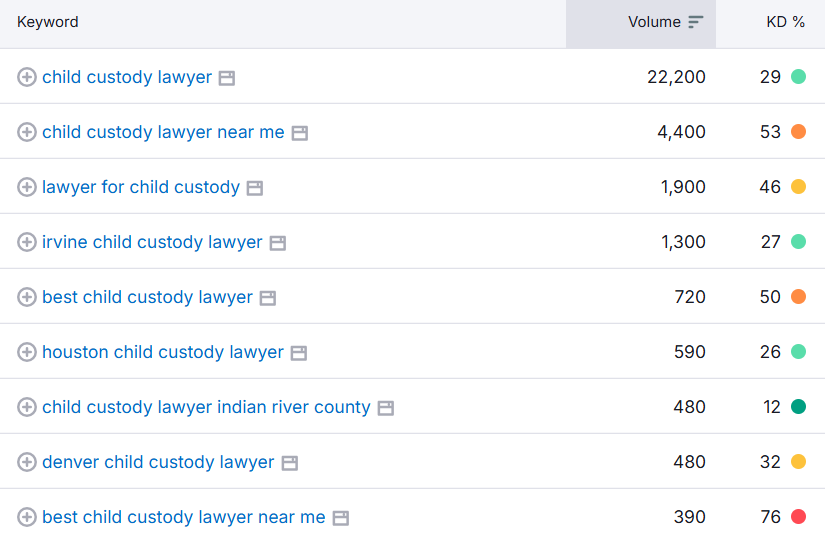
When users are online using search with terms of this kind, they’re directly indicating that they are intent on hiring help now. That means ranking for these could be a big boost to your bottom line. That alone makes it worth a firm’s while to prioritize a strategy that implements:
- Localized keywords
- Keywords that are highly service-specific
- Case-driving keywords
- Long-tail queries that feature strong intent
Your marketing team should always be providing your firm with ranking reports that highlight these high-intent terms. You want to note high-intent terms over generic keywords that only inflate the appearance of a strong performance.
Tracking Movements Over Time is a Must
Once those high-intent terms are in place, tracking movement over time is a must. It’s important to consistently be monitoring:
- How rankings are correlating with lead volume you’re seeing
- How ranking shift from one month to the next
- How your competitors are performing when utilizing the same terms
- What pages are losing or gaining visibility
Tracking this will make it clear whether the SEO strategy you’re using is aligned with your revenue goals. When tracking is matched with mapping keywords to conversions, there’s even more insight to be gained. Perhaps the most important step in the process is connecting keyword rankings to the actual leads you need to achieve. That means your analytics and CRM should transparently show:
- Keywords that generate successful calls
- Keywords that regularly produce form submissions
- Keywords that are directly linked to signed cases
The difference between guessing and knowing where your SEO strategy is going comes down to this. It’s the only way to ensure your investment in SEO is resulting in the measurable ROI you signed up for.
Organic Traffic vs. Branded Traffic
As previously mentioned, not all leads are equal in the world of SEO strategy. The same can be said for traffic. Many firms investing in legal marketing come up short on this front by treating branded and non-branded traffic as identical components of their approach to building an online presence. Branded traffic typically includes searches for information like:
- The names of attorneys that work at your firm
- Your law firm’s name
- Any of your firm’s branded terms
Branded traffic originates with people online who already have a sense of who your firm is and what you do. It can easily be influenced by referrals, reputation, and offline marketing more than direct SEO. Alternatively, Non-branded traffic (organic traffic) stems from users who don’t really have a grasp on your firm yet. They are typically discovering your information through SEO with searches that might include:
- How to file for divorce in my state
- Car accident lawyer near me
- Estate planning attorney in my city
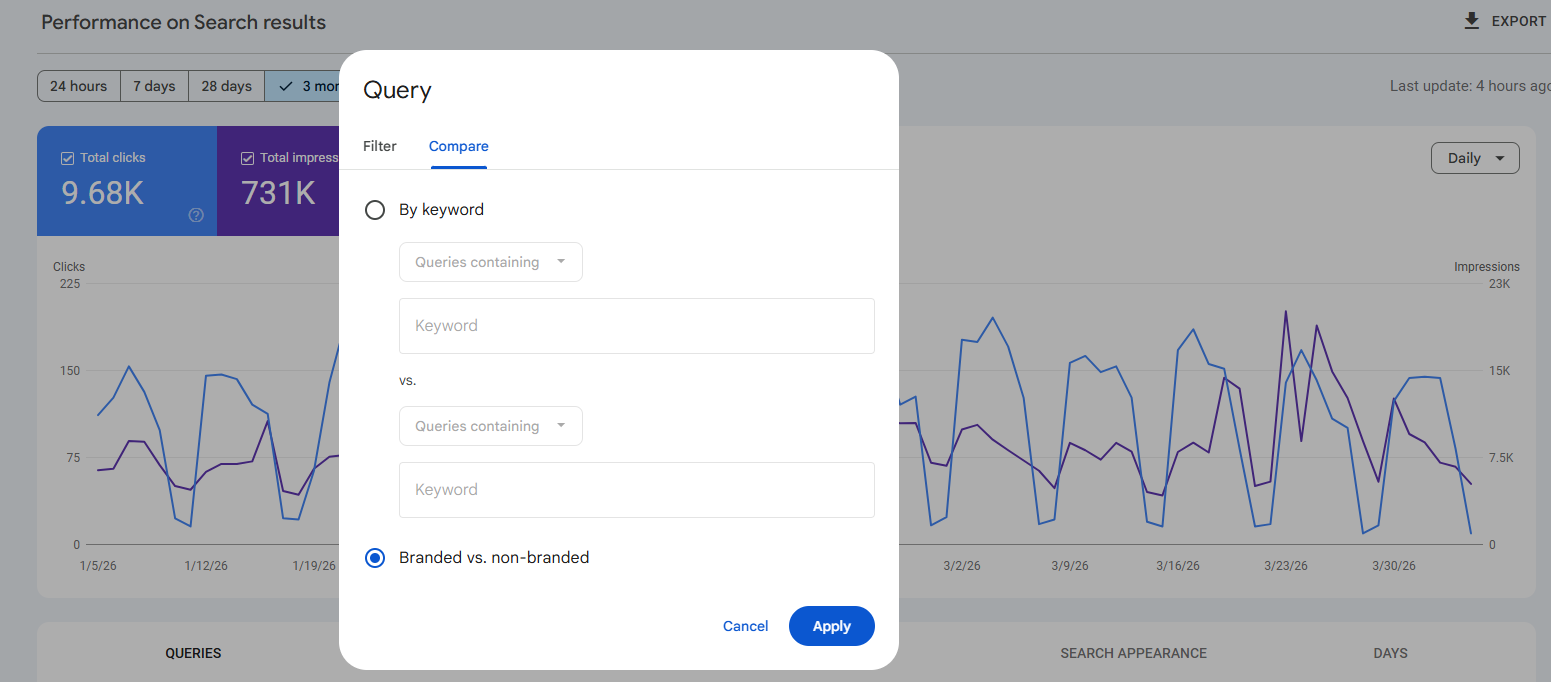
The distinction between these two types of traffic matters because it reflects drastically different points of search origin. Where your organic traffic is likely a result of your investment in SEO with an agency, branded traffic could be boosted due to social media posts, word of mouth, TV ads, billboards, and more. Tracking the difference between these types of traffic requires reporting that shows:
- Branded clicks vs non-branded clicks
- Branded impressions vs non-branded impressions
- Landing pages associated with each type of traffic
Understanding these differences shows whether your SEO strategy is successfully attracting new and potential clients or exclusively appealing to those who are already familiar with your firm’s work.
Local Map Pack Visibility
The vast majority of law firms understandably find the Google Local Map Pack to be among the most valuable pieces of online real estate they invest in. Firms that can successfully rank in the top three positions are known to produce more leads than what comes through traditional organic listings. The Map Pack matters because those who are searching for legal services online often choose from the Map Pack, knowing it provides:
- Authentic reviews
- Verified contact information
- Accurate hours
- Accessible directions
- Proximity to their place of need
To reach these high-intent users online, you’re going to want your marketing agency to track key Map Pack metrics for your firm, such as:
- Visibility across local ZIP codes
- Local ranking positions
- The completeness of your profile
- Review volume
- Rating trends
- Photo engagement
- Driving-direction requests
These are important metrics that can point to how well your firm is actually performing in local search. Other factors that can certainly influence Map Pack rankings over time include:
- Local citations built into your website
- Proximity of your firm to the searcher
- On-page local signals
- Google Business Profile optimization
- Review quantity and quality
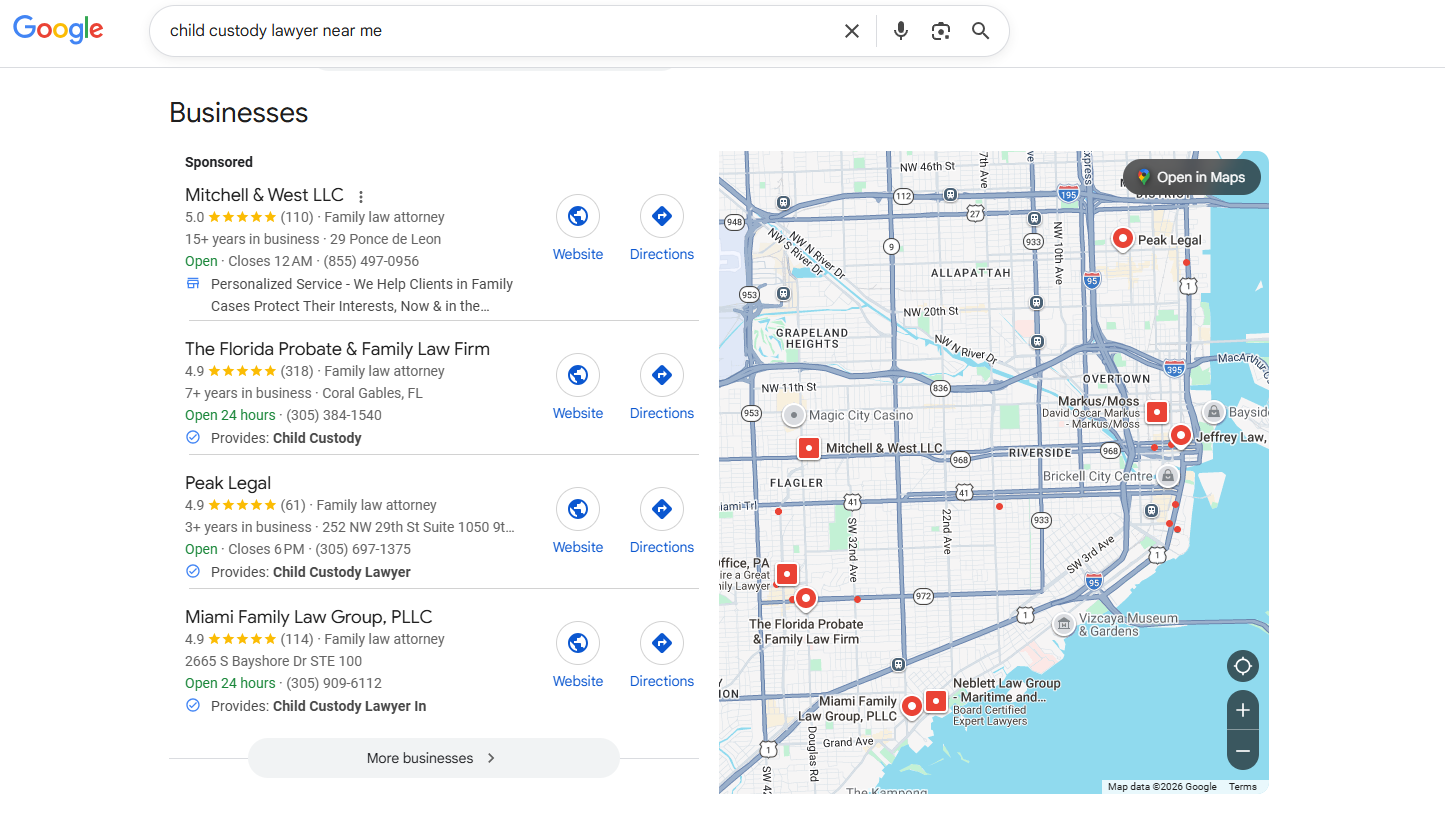
Taking all of these factors into consideration is key to not only understanding what’s working with your marketing approach, but also what could be improved down the line. Reaching these high-intent Map Pack users can ultimately lead to increased calls to your firm, more consultations, and an increase in signed cases.
The Monthly Report Checklist: What Your Agency Should Be Showing You
As a law firm, you have the right to know that your marketing agency is providing you with monthly reporting that focuses on metrics that truly make an impact. In the end, a report exclusively highlighting vanity data doesn’t do anyone any good. It’s important to make sure that your monthly report showcases metrics around lead conversion data. This should be a breakdown of information regarding:
- Leads by case type
- Leads by channel
- Total leads
- Cost per acquisition
- Conversion rate
You’ll also want clear insight into keyword performance specific to movement month over month, ranking for those high-intent keywords, and competitor comparisons as well. Your report should include traffic breakdown specifying your strategy’s branded vs non-branded traffic, engagement metrics, and organic landing pages that are high-performing. When it comes to local SEO metrics in your report, be sure to look for Map Pack rankings and metrics around calls coming from your firm’s Google Business Profile. Your website’s overall performance metrics should also be featured in the report and indicate:
- Mobile usability
- Indexing status
- Page speed
- Technical issues that need resolving
Finally, ensure that your report includes an ROI summary that gives you insight into the cost per signed case and revenue that’s been generated from organic leads. Above all, your monthly report should be actionable, simple to understand by everyone, and seamlessly linked to your short and long-term goals.
Holding Your Marketing Team Accountable
There’s no doubt about it, SEO is a significant investment. Similar to any other investment your firm makes, you deserve to see consistent and measurable returns. One way to make sure this happens is to align yourself with a marketing team that’s dedicated to integrating:
- High-intent keywords into your marketing strategy
- Monitoring Map Pack visibility
- Separating non-branded from branded traffic