

Managing partners frequently experience a highly specific type of frustration when reviewing their monthly digital marketing reports. The data shows that their firm finally achieved a coveted Page 1 ranking for a highly lucrative keyword. The organic impressions are up. The digital real estate has theoretically been secured. Yet, the intake team is not receiving an influx of qualified calls. The lead volume remains stagnant, and the return on investment seems nonexistent.
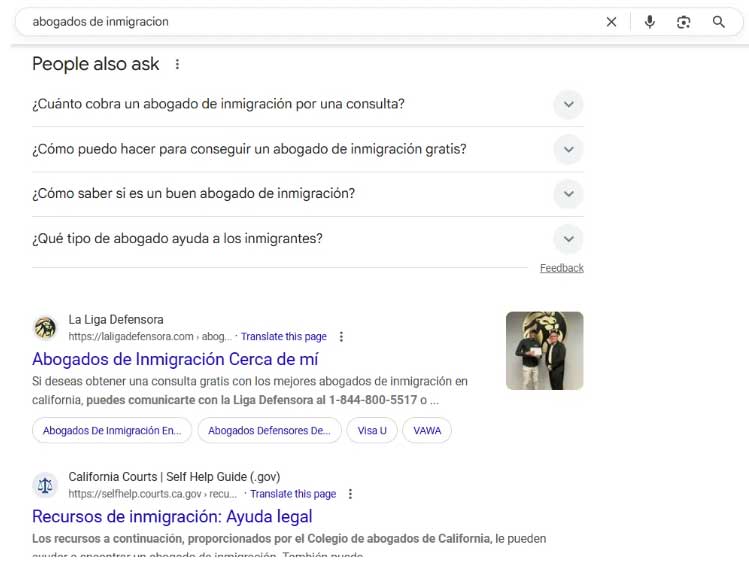
This disconnect occurs because the traditional search engine results page has fundamentally evolved. Google has aggressively pushed standard organic links down below the fold. When a prospect searches for a legal remedy today, the top of their screen is immediately dominated by Local Services Ads, the Google Map Pack, and the rapidly expanding "People Also Ask" accordion. Traditional blue links are no longer the primary acquisition channel for high-level legal inquiries, as tracked in recent search engine visibility reports.
We have entered the era of the zero-click search phenomenon. High-net-worth prospects are utilizing Google to ask complex, nuanced legal questions. Instead of clicking through to read a lengthy article on a law firm's website, they are getting their initial questions answered directly within the People Also Ask box on the search results page itself. If your firm is not providing that immediate answer, you are entirely invisible to a massive segment of the market.
This evolution is not a threat to your practice. It presents a massive attorney lead generation opportunity for practices that know how to hijack this specific digital feature. Securing these coveted placements requires specialized SEO services for family law that prioritize algorithmic formatting over traditional keyword stuffing.
Decoding the Psychology Behind the Family Law Question
To capture these zero-click searches, you must first understand the intense psychology of a high-value legal consumer. Generic, low-converting search terms like "divorce lawyer" or "child custody attorney" are essentially digital phone book lookups. They lack the specific intent required to capture a premium retainer.
In contrast, the conversational queries that trigger People Also Ask boxes are highly specific and emotionally charged. A founder facing a hostile separation does not begin their journey by searching for a local law firm. They execute a panic search. They type questions like "how to protect my business from a spouse during divorce" or "can I move out of state with my child without a court order" into their mobile device at two in the morning.
These family law prospects are not initially looking for a firm to hire. They are desperately looking for immediate validation of their deepest financial and parental fears. They need to know what their exposure is and what legal mechanisms exist to protect them, often evaluating complex topics like cross-border custody strategies.
When your firm provides the exact answer directly inside the People Also Ask box, a powerful psychological shift occurs. You immediately establish your firm as the de facto authority at the exact moment of the user's highest vulnerability, demonstrating clear E-E-A-T legal authority. By addressing their specific panic search with a calm, authoritative answer, you effectively pre-qualify the lead. Implementing top-tier seo services for family law usa allows your firm to map out this user psychology and intercept the prospect before they ever navigate to a competitor's homepage.
The Syntactical Blueprint for Capturing Google’s PAA Snippets
Understanding user psychology is only half of the acquisition equation. You must also understand the strict syntactical formatting required to force Google’s algorithm to choose your firm’s answer over thousands of competitors.
A common and very expensive mistake made by law firms is publishing massive, two-thousand-word walls of dense legal text on their service pages. While comprehensive information is valuable, Google’s natural language processing algorithms cannot easily parse a massive block of legalese into a neat, user-friendly snippet. If the machine cannot read it quickly, it will not feature it in the People Also Ask box.
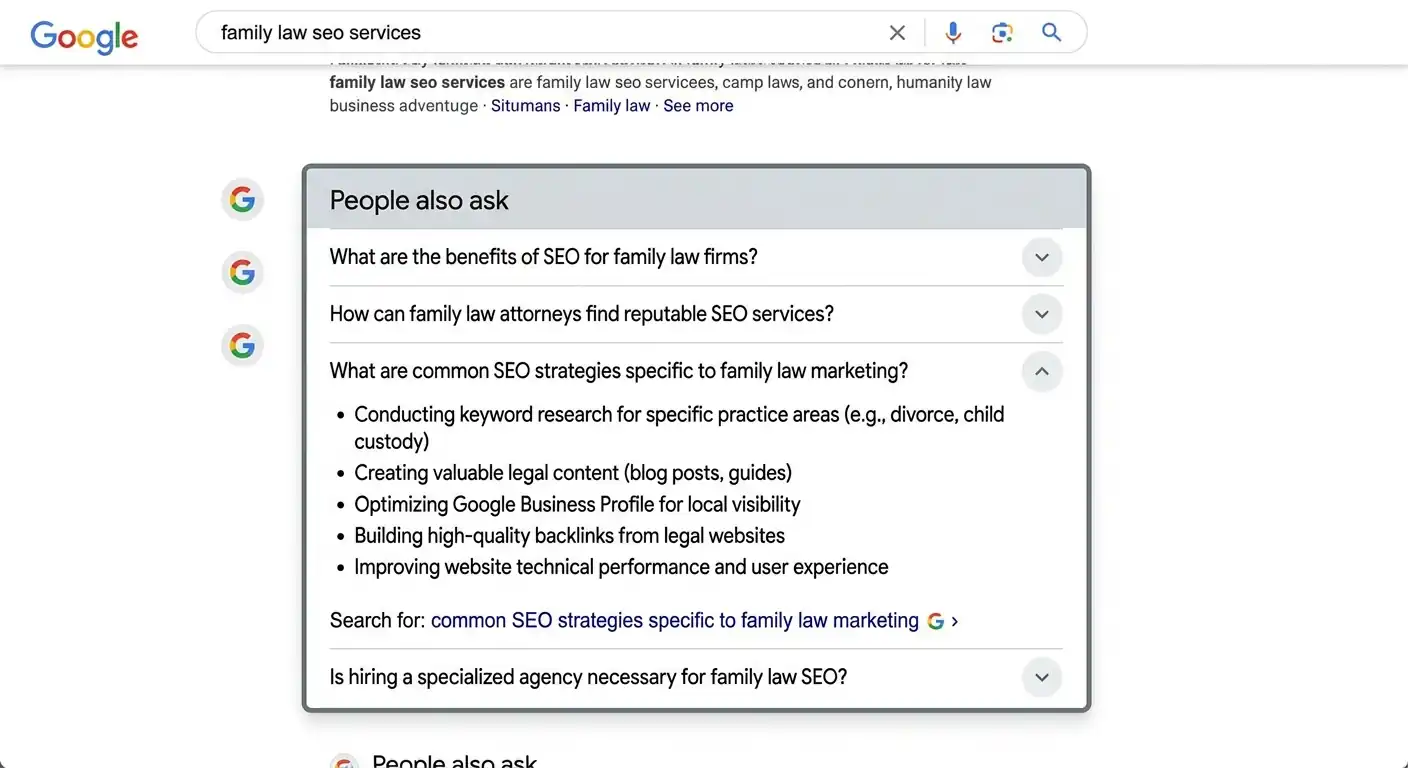
Winning a placement requires a highly technical formula known as the Target-Answer-Expand method. Your technical content architecture must utilize this exact blueprint for every major legal question you target. First, use the exact question as an H2 or H3 header tag on your webpage. Immediately beneath that header, provide a concise, forty-to-fifty-word direct answer. This brief paragraph must be free of complex legal jargon to satisfy Google's strict readability preferences.
After delivering the concise answer, you can expand on the legal nuance in the subsequent paragraphs. For multi-step legal processes, you must utilize formatted lists. Google heavily favors structured data.
Consider the following execution for optimal formatting:
- Use numbered lists for sequential legal actions, such as the steps to file for emergency custody.
- Use bulleted lists to outline qualifying criteria, such as factors a judge considers for spousal support.
- Keep list items short and punchy to ensure they display cleanly within a constrained digital box.
Executing this syntactical blueprint perfectly is a core component of premium seo services for family law, ensuring your firm's expertise is translated into a format the search engine actually wants to promote.
Weaponizing PAA to Engineer High-Asset Topical Clusters
Formatting a single answer correctly is a tactical victory. However, using People Also Ask data to build out entire content ecosystems is the strategic endgame for law firm dominance. Managing partners waste massive amounts of their marketing budget guessing what topics their attorneys should write about next. They rely on intuition instead of data, which leads to content that nobody is actually searching for.
The People Also Ask feature provides a free, algorithmic roadmap directly from Google. It tells you exactly what affluent clients want to know. This feature operates on a principle of infinite expansion. When a user clicks on one question to read the answer, Google dynamically generates two or three more highly related questions beneath it.
Savvy firms utilize this infinite expansion to map out a comprehensive Pillar and Cluster website architecture as part of a modern law firm content strategy. You start with a broad pillar page, such as High-Net-Worth Divorce. You then use the dynamically generated questions to build out hyper-specific cluster pages. These supporting pages address the granular concerns of wealthy clients, such as dividing unvested restricted stock units, uncovering offshore accounts, and calculating enterprise goodwill in family court.
By building dedicated pages that directly answer these clustered questions, you signal massive topical authority to the search algorithms, complementing local visibility efforts like Google My Business optimization. This interconnected web of answers traps the user within your firm's digital ecosystem. Deploying advanced law firm SEO ensures that every potential question a high-asset prospect could ask is already answered comprehensively on your domain.
Engineering SERP Domination with Blue Media Marketing Law
Executing this complex, algorithm-pleasing architecture across a massive law firm website requires specialized technical intervention. Attempting to manage this internally is a dangerous operational risk. Billable attorneys should never be tasked with formatting H2 tags, writing meta descriptions, or injecting code into the backend of a website. Furthermore, relying on generalist marketing agencies frequently leads to failure because they do not understand the strict compliance rules and ethical nuances of legal marketing.
Blue Media Marketing Law operates as the elite architect for claiming prime search engine real estate. We deploy specialized seo services family law practices depend on to ensure your practice dominates the most critical acquisition channels. We are not just web designers. We are digital acquisition specialists who engineer content to intercept high-value cases before your competitors even realize a search occurred.
We utilize specific, advanced services to force your firm into the People Also Ask box. We implement compliance-focused FAQPage structured data standards across your highest-value service pages, feeding your legal answers directly into Google's indexing systems. We execute Semantic Content Engineering to ensure your vocabulary matches the natural language processing algorithms perfectly, while integrating effective conversion rate optimization. Finally, we conduct rigorous Competitor PAA Gap Analysis to identify exactly which lucrative questions your local rivals are ignoring, allowing us to capture that abandoned market share for your firm using tailored local seo for lawyers.
Data-driven managing partners naturally have tactical questions regarding the return on investment and the mechanical reality of executing a search feature strategy.
Advanced FAQs: Calibrating PAA Strategies for Maximum Law Firm ROI
If users get their answer directly in the 'People Also Ask' box, won't that decrease traffic to our actual website?
It is a common misconception that providing the answer on the search page eliminates the need for a website visit. The goal of winning the snippet is to create highly authoritative brand touchpoints. Family law is incredibly complex. A fifty-word snippet can answer a basic question, but it cannot solve a user's entire legal crisis. A well-crafted snippet provides immediate value but inherently leaves the user needing specialized application. The snippet acts as a hook. When the prospect realizes that their situation involving hidden assets or interstate custody requires deep legal nuance, they are compelled to click through the link provided in the box to read the full article on your website. This strategy ultimately drives lower volume but vastly higher-intent traffic directly to your intake forms.
Does our family law firm need to rank on Page 1 organically to be featured in the PAA box?
You do not need to hold a traditional Page 1 ranking to secure a placement in these search features. This is one of the most powerful digital acquisition secrets in the legal industry. Google frequently pulls answers for the accordion from domains that rank on Page 2 or Page 3 for the core keyword. The algorithm prioritizes the specific formatting of the answer over the overall organic ranking of the page. This makes targeting search features an incredible backdoor strategy. It allows newer or smaller family law practices to effectively leapfrog more established local competitors who have older domains but poorly formatted, outdated content architecture.
How does FAQ Schema markup influence our ability to capture these search features?
FAQ Schema markup is a highly technical piece of code that acts as a direct translator between your website and Google's crawling bots. When a standard web page is published, search engines must guess what the text means based on context. By injecting JSON-LD schema code directly into the backend of a custody or alimony page, you eliminate the guesswork. This code explicitly labels the question and the answer for the algorithm. You are effectively spoon-feeding your Q&A data directly to the search engine in its native language. This technical optimization drastically increases the odds of selection and is a mandatory component of premium family law SEO services designed for high-asset acquisition.
How quickly can a law firm expect to see results from a PAA snippet optimization campaign?
Results from PAA snippet optimizations often materialize significantly faster than traditional organic ranking improvements. Because Google continuously tests snippet sources, structured Q&A blocks and schema updates can be indexed and featured within a few weeks of re-crawling.
Can PAA optimization strategies be applied to other legal practice areas beyond family law?
Yes. The Target-Answer-Expand framework and schema implementation apply universally across high-intent legal practice areas including criminal defense, personal injury, business litigation, and estate planning where prospective clients execute detailed Q&A searches.
The digital landscape for legal marketing is entirely unforgiving. The opportunity cost of inaction is staggering. Every single time a competitor's firm appears in a search feature answering a question about complex asset division or business valuation, they are actively stealing a potential seven-figure case from your pipeline.
Winning the People Also Ask box is no longer an SEO luxury. It is a mandatory, non-negotiable tactic for maintaining visibility in modern legal search. Affluent prospects demand immediate, authoritative answers to their most terrifying financial and familial questions. If your digital footprint is not engineered to provide those answers at the exact moment of their panic search, your firm will inevitably lose market share to the practices that do.
Stop losing critical digital ground to local competitors who understand how to manipulate the modern search results page. You need elite technical architecture to claim your unfair share of the market. Contact the digital strategists at Blue Media Marketing Law today to schedule a comprehensive visibility audit and a bespoke strategy session, and start dominating the zero-click battlefield.